Can a small boom sprayer be used in greenhouses? This is a question that many greenhouse growers often ask, and as a supplier of Small Boom Sprayer, I'm here to delve into this topic in detail.
The Need for Spraying in Greenhouses
Greenhouses are delicate ecosystems designed to provide an ideal environment for plant growth. They are used to protect crops from harsh weather conditions, pests, and diseases. However, just like open - field crops, greenhouse plants also require proper pest and disease control, as well as nutrient application. Spraying pesticides, fungicides, and fertilizers is a crucial part of greenhouse management. These applications help in maintaining the health and productivity of the plants. A well - executed spraying program can prevent the spread of diseases, reduce pest infestations, and ensure that plants receive the necessary nutrients for optimal growth.
Advantages of Using a Small Boom Sprayer in Greenhouses
Precision Application
Small boom sprayers are known for their ability to deliver precise applications. In a greenhouse, where space is often limited, and the plants are grown in rows or beds, a small boom sprayer can be adjusted to target specific areas. The boom can be set at the appropriate height and width to ensure that the spray is evenly distributed over the plants. This precision helps in reducing waste and ensuring that the chemicals or nutrients are applied only where they are needed. For example, if you are growing a particular variety of tomatoes in a greenhouse, a small boom sprayer can be configured to spray the entire canopy of the tomato plants without over - spraying adjacent areas.
Space Efficiency
Greenhouses have limited floor space, and maneuverability is a significant concern. A small boom sprayer is compact and can easily navigate through the narrow aisles and between plants. Unlike large - scale sprayers, small boom sprayers do not require a lot of turn - around space. They can be quickly moved from one area of the greenhouse to another, allowing for efficient spraying operations. This makes them an ideal choice for both small and large greenhouses where space is at a premium.
Cost - Effectiveness
For small - to medium - sized greenhouse operations, the cost of equipment is a major consideration. Small boom sprayers are generally more affordable than their larger counterparts. They have lower initial purchase costs and also consume less fuel or energy during operation. Additionally, the reduced chemical waste due to precise application further lowers the overall cost of spraying. This makes a small boom sprayer a cost - effective solution for greenhouse growers who want to achieve good results without breaking the bank.


Considerations When Using a Small Boom Sprayer in Greenhouses
Boom Length
The boom length of a small boom sprayer is an important factor to consider in a greenhouse. A shorter boom may be more suitable for smaller greenhouses or those with complex layouts. It allows for better maneuverability and reduces the risk of the boom hitting the greenhouse structure or plants. On the other hand, a slightly longer boom, such as the 20m Boom Sprayer, can cover more area in a single pass, which can be beneficial for larger greenhouses with more open space. However, it is essential to ensure that the boom length is compatible with the greenhouse dimensions.
Spray Pattern and Droplet Size
The spray pattern and droplet size of the small boom sprayer need to be carefully selected based on the specific requirements of the greenhouse crops. For example, some crops may require a fine mist spray to ensure good coverage of the leaves, while others may need a coarser spray for better penetration. The spray pattern should also be adjusted to avoid over - spraying on the greenhouse walls or floors. Additionally, in a closed environment like a greenhouse, the evaporation rate of the droplets is different from that in an open field. This means that the droplet size needs to be optimized to ensure that the spray reaches the target plants without causing excessive moisture in the greenhouse.
Ventilation and Air Circulation
Proper ventilation and air circulation are crucial when using a small boom sprayer in a greenhouse. The chemicals or fertilizers being sprayed can create fumes or mists that need to be dispersed to prevent the build - up of harmful concentrations. A well - designed ventilation system can help in removing these fumes and ensuring the safety of the workers and the health of the plants. It is also important to consider the direction of the air flow in the greenhouse to ensure that the spray is not blown away from the target plants.
Comparison with Other Spraying Methods
Hand - held Sprayers
Hand - held sprayers are commonly used in greenhouses, especially for small - scale operations. However, they have several limitations compared to small boom sprayers. Hand - held sprayers are labor - intensive and can result in inconsistent spraying. It is difficult to achieve uniform coverage over a large area, and the operator may be exposed to the chemicals for a longer period. In contrast, a small boom sprayer can cover a larger area more quickly and evenly, reducing the labor requirements and the risk of operator exposure.
Automated Drip or Mist Systems
Automated drip or mist systems are another option for greenhouse spraying. These systems are designed to deliver a continuous supply of water, fertilizers, or chemicals directly to the root zone or the plant surface. While they are efficient for some applications, they may not be suitable for all types of pest and disease control. For example, some pests or diseases may require a foliar spray, which is better achieved with a small boom sprayer. Additionally, drip or mist systems may be more expensive to install and maintain compared to a small boom sprayer.
Real - World Applications and Success Stories
Many greenhouse growers have successfully used small boom sprayers in their operations. For instance, a tomato grower in a medium - sized greenhouse found that using a small boom sprayer improved the uniformity of pesticide application. This led to a significant reduction in pest infestations and an increase in the overall quality of the tomatoes. Another grower of ornamental plants used a small boom sprayer to apply fertilizers evenly across the plant beds. The result was healthier plants with better growth and more vibrant colors.
Conclusion
In conclusion, a small boom sprayer can indeed be used effectively in greenhouses. It offers several advantages such as precision application, space efficiency, and cost - effectiveness. However, it is important to consider factors like boom length, spray pattern, and ventilation when using a small boom sprayer in a greenhouse environment. When compared to other spraying methods, a small boom sprayer provides a good balance between efficiency and effectiveness.
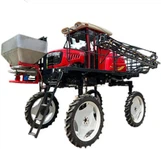
If you are a greenhouse grower looking for a reliable and efficient spraying solution, our Small Boom Sprayer is an excellent choice. We also offer a range of Agricultural Self - propelled Boom Sprayer options that can be customized to meet your specific needs. Contact us today to discuss your requirements and explore how our products can enhance your greenhouse spraying operations.
References
- Jones, R. (2019). Greenhouse Pest and Disease Management. Agricultural Press.
- Smith, M. (2020). Spraying Equipment for Horticultural Crops. Horticulture Journal.