Are small boom sprayers suitable for small - scale farms?
As a supplier of Small Boom Sprayers, I've encountered numerous inquiries from small - scale farmers regarding the suitability of these sprayers for their operations. In this blog, I'll delve into the various aspects to help you determine whether a small boom sprayer is the right choice for your small - scale farm.
Advantages of Small Boom Sprayers for Small - Scale Farms
One of the most significant advantages of small boom sprayers is their maneuverability. Small - scale farms often have irregularly shaped fields or areas with limited access. A Small Boom Sprayer can easily navigate through these tight spaces, reaching every corner of the field. Unlike large - scale sprayers, which may struggle to turn or operate in confined areas, small boom sprayers can be adjusted to fit the specific layout of your farm.
Cost - effectiveness is another key factor. Purchasing and maintaining large agricultural equipment can be a substantial financial burden for small - scale farmers. Small boom sprayers are generally more affordable both in terms of the initial purchase price and long - term maintenance costs. They consume less fuel, and replacement parts are usually less expensive. This allows small - scale farmers to achieve efficient spraying operations without breaking the bank.
Small boom sprayers also offer precision spraying. With advanced nozzle technology, these sprayers can deliver the right amount of pesticides, fertilizers, or herbicides exactly where they are needed. This not only improves the effectiveness of the spraying but also reduces waste. For small - scale farms, where resources are often limited, precision spraying can lead to significant savings in the use of chemicals.
In addition, small boom sprayers are relatively easy to operate. Most small - scale farmers may not have extensive training in operating complex agricultural machinery. The user - friendly design of small boom sprayers means that farmers can quickly learn how to use them effectively. This simplicity also reduces the need for hiring specialized operators, further cutting down on costs.
Considerations for Small - Scale Farms
While small boom sprayers have many advantages, there are also some considerations that small - scale farmers need to keep in mind. One of the main limitations is the spraying width. Compared to large boom sprayers, small boom sprayers typically have a narrower spraying width. This means that it may take more time to cover a large area. However, for small - scale farms, where the total area to be sprayed is relatively small, this may not be a significant drawback.
The tank capacity of small boom sprayers is also usually smaller. This requires more frequent refilling during the spraying process. If your farm is located far from a water source or storage area for chemicals, this could be an inconvenience. However, some small boom sprayers are designed with quick - refill systems to minimize the time spent on refilling.
Another consideration is the type of crops. Some crops may require specific spraying techniques or equipment. For example, tall crops may need a 12m Boom Sprayer or an Agricultural High Pole Sprayer to ensure proper coverage. Small boom sprayers may not be suitable for all types of crops, especially those with unique growth characteristics.

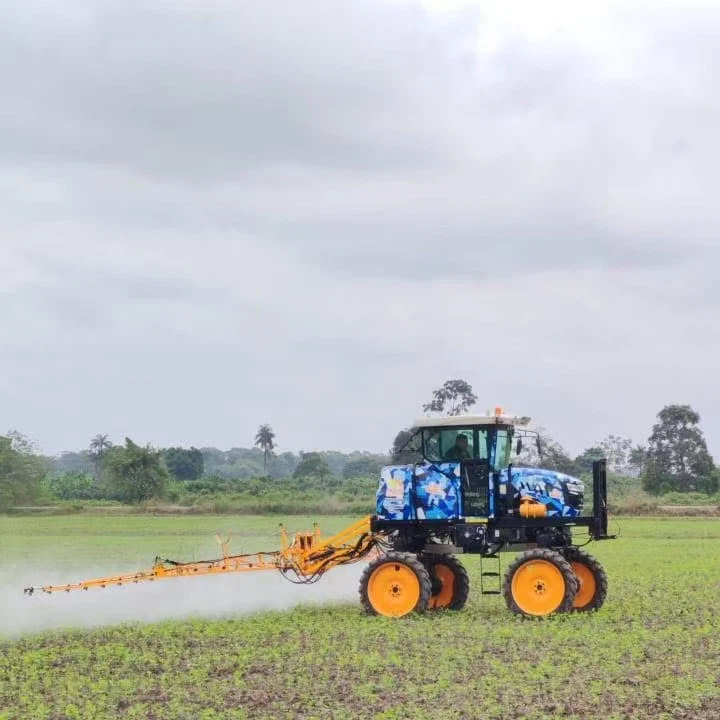
Real - World Examples
To illustrate the suitability of small boom sprayers for small - scale farms, let's look at some real - world examples. There is a small family - owned vegetable farm that grows a variety of crops in a relatively small area. The farm has narrow rows and limited space between the fields. By using a small boom sprayer, the farmers can easily navigate through the rows and spray the crops precisely. They have found that the small boom sprayer has significantly reduced their chemical usage and labor costs.
Another example is a small vineyard. The vineyard has a hilly terrain and irregularly shaped plots. A small boom sprayer can be adjusted to the slope of the land and reach all the vines. The precision spraying feature of the small boom sprayer ensures that the vines receive the right amount of pesticides and fertilizers, resulting in healthier and more productive vines.
Making the Decision
When deciding whether a small boom sprayer is suitable for your small - scale farm, you need to consider your specific needs and circumstances. Evaluate the size and layout of your farm, the type of crops you grow, your budget, and your labor resources. If your farm has limited space, a tight budget, and requires precision spraying, a small boom sprayer is likely to be a good choice.
If you are still unsure, you can also consult with other small - scale farmers who have experience using small boom sprayers. They can provide valuable insights based on their own experiences. Additionally, you can request a demonstration from a supplier to see how the small boom sprayer performs in your actual farming conditions.
Conclusion
In conclusion, small boom sprayers can be a highly suitable option for small - scale farms. Their maneuverability, cost - effectiveness, precision spraying, and ease of use make them a practical choice for many small - scale farmers. However, it's important to carefully consider the limitations and your specific requirements before making a purchase.
If you are interested in learning more about our Small Boom Sprayer or would like to discuss your specific needs, please feel free to contact us. We are here to provide you with the best solutions for your small - scale farming operations.
References
- Smith, J. (2020). Agricultural Equipment for Small - Scale Farms. Journal of Small - Scale Agriculture, 15(2), 34 - 45.
- Johnson, A. (2019). Precision Spraying Techniques in Modern Agriculture. Agricultural Science Review, 22(3), 56 - 67.
- Brown, C. (2021). Cost - Benefit Analysis of Small - Scale Agricultural Machinery. Farm Economics Journal, 18(4), 78 - 89.