As a seasoned supplier of boom sprayers, I've often been asked whether a boom sprayer can be used for foliar fertilization. It's a question that touches on the versatility and practicality of these essential agricultural tools. In this blog post, I'll explore the feasibility, advantages, and considerations of using a boom sprayer for foliar fertilization.
Understanding Foliar Fertilization
Foliar fertilization is the process of applying liquid fertilizers directly to the leaves of plants. Unlike traditional soil - based fertilization, which relies on the roots to absorb nutrients, foliar fertilization allows plants to take in nutrients through their leaves. This method can be particularly useful in situations where soil conditions limit nutrient uptake, or when plants need a quick boost of specific nutrients.
The Suitability of Boom Sprayers for Foliar Fertilization
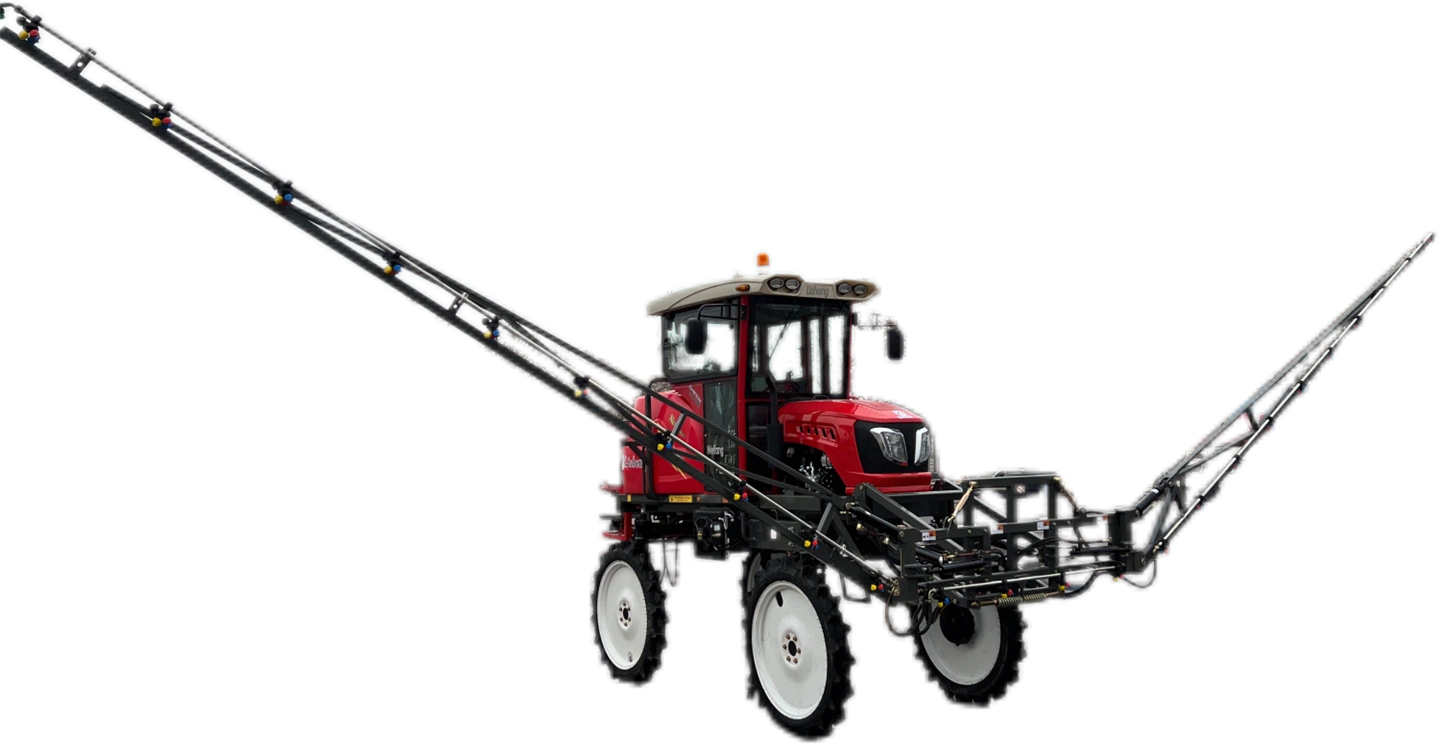
Boom sprayers are designed to distribute liquids over a large area in a uniform manner. They consist of a tank, a pump, and a boom with multiple nozzles. These features make them well - suited for foliar fertilization for several reasons.
Wide Coverage
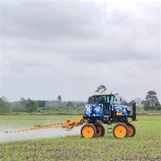
One of the main advantages of using a boom sprayer for foliar fertilization is its ability to cover a large area quickly. The long boom can span several meters, allowing the operator to cover a significant portion of the field in a single pass. This is especially beneficial for large - scale agricultural operations where time is of the essence. For example, in a large cornfield, a boom sprayer can cover several acres in a relatively short period, ensuring that all the plants receive the necessary nutrients in a timely manner.
Uniform Application
Boom sprayers are engineered to provide a uniform application of the liquid fertilizer. The nozzles on the boom are designed to produce a consistent spray pattern, ensuring that each plant receives an equal amount of fertilizer. This uniformity is crucial for foliar fertilization, as uneven application can lead to inconsistent plant growth and nutrient deficiencies in some areas of the field.
Adjustable Settings
Most modern boom sprayers come with adjustable settings, such as spray pressure and nozzle flow rate. These settings can be adjusted according to the type of crop, the stage of growth, and the specific requirements of the foliar fertilizer. For instance, younger plants may require a lower spray pressure to avoid damage to the leaves, while larger, more established plants can tolerate a higher pressure for better coverage.
Types of Boom Sprayers for Foliar Fertilization
There are different types of boom sprayers available in the market, each with its own features and advantages for foliar fertilization.
High Clearance Boom Sprayer
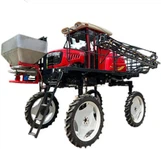
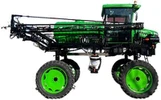
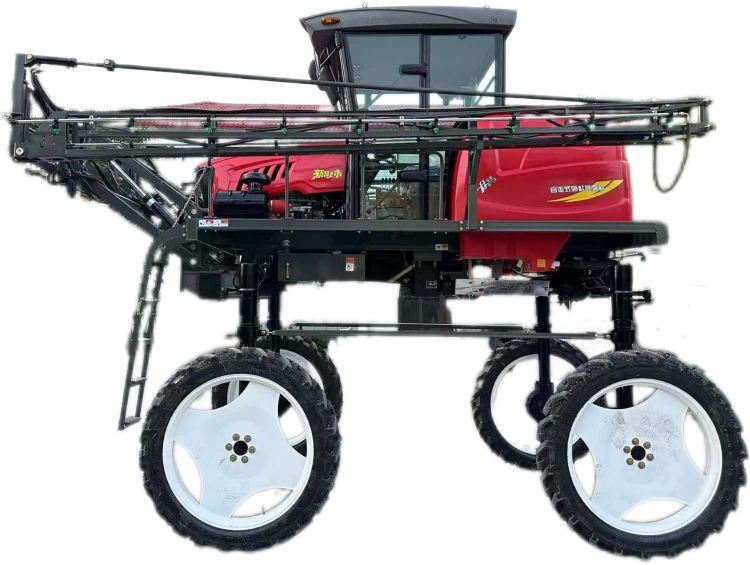
A High Clearance Boom Sprayer is an excellent choice for foliar fertilization in tall crops such as corn, sorghum, and sunflowers. The high clearance design allows the sprayer to pass over the top of the plants without causing damage. This type of sprayer is typically mounted on a tractor or a self - propelled chassis, providing stability and maneuverability in the field.
Self - propelled High Clearance Boom Sprayer
For even greater efficiency and productivity, a Self - propelled High Clearance Boom Sprayer is a top option. These sprayers are equipped with their own power source and are specifically designed for large - scale agricultural operations. They offer greater speed, better maneuverability, and a larger tank capacity, allowing for longer periods of operation without the need for frequent refilling.
Considerations for Using a Boom Sprayer for Foliar Fertilization
While boom sprayers are well - suited for foliar fertilization, there are several considerations that need to be taken into account to ensure optimal results.
Fertilizer Compatibility
Not all fertilizers are suitable for foliar application. Some fertilizers may be too concentrated or may contain ingredients that can damage the leaves. It's important to choose a foliar fertilizer that is specifically formulated for use with boom sprayers and is compatible with the crop being treated. Before applying any fertilizer, it's advisable to conduct a small - scale test on a portion of the field to check for any adverse reactions.
Weather Conditions
Weather conditions play a crucial role in the effectiveness of foliar fertilization. The best time to apply foliar fertilizer is during the early morning or late afternoon when the temperature is cooler, and the humidity is higher. This allows the fertilizer to stay on the leaves for a longer period, increasing the chances of absorption. Avoid applying fertilizer during windy conditions, as this can cause the spray to drift and result in uneven application or damage to neighboring crops.
Spray Drift
Spray drift is a common problem when using boom sprayers. It occurs when the spray droplets are carried away from the target area by the wind. To minimize spray drift, it's important to use the appropriate nozzles and adjust the spray pressure according to the weather conditions. Additionally, buffer zones can be established around the field to prevent the spray from reaching non - target areas.
Tips for Successful Foliar Fertilization with a Boom Sprayer
- Calibrate the Sprayer: Before each use, make sure to calibrate the boom sprayer to ensure accurate application of the fertilizer. This involves measuring the flow rate of the nozzles and adjusting the settings accordingly.
- Clean the Sprayer: After each use, thoroughly clean the boom sprayer to prevent the buildup of fertilizer residues. This will help to maintain the performance of the sprayer and prevent corrosion.
- Follow the Manufacturer's Instructions: Always follow the manufacturer's instructions when using the boom sprayer and the foliar fertilizer. This includes the recommended application rates, mixing ratios, and safety precautions.
Conclusion
In conclusion, a boom sprayer can indeed be used for foliar fertilization. Its wide coverage, uniform application, and adjustable settings make it a valuable tool for large - scale agricultural operations. By choosing the right type of boom sprayer, considering the fertilizer compatibility and weather conditions, and following the proper application techniques, farmers can achieve excellent results with foliar fertilization.
If you're interested in exploring the options of using a boom sprayer for foliar fertilization in your agricultural operation, I encourage you to reach out for more information. Our team of experts is ready to assist you in selecting the most suitable boom sprayer for your specific needs. Whether you're a small - scale farmer or a large - scale agricultural enterprise, we have the solutions to help you maximize your crop yields. Contact us today to start a discussion about your foliar fertilization requirements and how our boom sprayers can meet them.
References
- "Foliar Fertilization: Principles and Practices" - Journal of Agricultural Science
- "Boom Sprayer Technology and Applications" - Agricultural Engineering Handbook