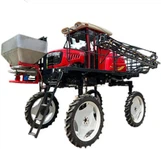
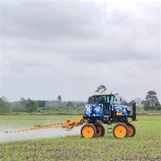
Pest control is a critical aspect of modern agriculture, horticulture, and even some urban green space management. Ensuring that crops and plants are protected from pests can significantly impact yield, quality, and overall economic viability. One of the tools that has emerged as a potential solution for efficient pest control is the four - wheel sprayer. As a supplier of Four - wheel Sprayer, I will explore in this blog whether a four - wheel sprayer can be effectively used for pest control.
Advantages of Four - Wheel Sprayers in Pest Control
Mobility and Accessibility
Four - wheel sprayers offer excellent mobility. Unlike some stationary or towed spraying equipment, they can move freely across fields, orchards, or other large areas. Their four - wheel design provides better traction, allowing them to navigate different terrains, including uneven ground, slopes, and wet or muddy areas. This mobility is crucial in pest control because pests can be present in various parts of a large area, and the ability to reach these locations quickly and easily is essential. For example, in a large orchard, pests might infest the trees at the edges or in the middle of the orchard. A four - wheel sprayer can easily drive through the rows of trees to apply the necessary pesticides.
Wide Coverage
Most four - wheel sprayers are equipped with booms that can extend over a wide area. These booms can be adjusted in width, allowing for different levels of coverage depending on the size of the area to be treated. For instance, our 12m Boom Sprayer can cover a large swath of land in a single pass. This wide coverage is highly efficient for pest control, as it reduces the time and effort required to treat a large area. Instead of making multiple passes with a smaller spraying device, a four - wheel sprayer with a wide boom can cover the same area in fewer passes, which is especially important when dealing with pests that can spread rapidly.
Precision Application
Modern four - wheel sprayers are often equipped with advanced technology that allows for precise application of pesticides. They can control the flow rate, pressure, and droplet size of the spray. This precision is important in pest control because it ensures that the right amount of pesticide is applied to the target area. Over - application of pesticides can be wasteful, costly, and harmful to the environment, while under - application may not effectively control the pests. For example, some pests may require a specific droplet size for the pesticide to adhere to their bodies or the plant surfaces where they are located. Four - wheel sprayers can be adjusted to meet these requirements, improving the effectiveness of pest control.
Adaptability
Four - wheel sprayers can be adapted to different types of pest control scenarios. They can be used to apply different types of pesticides, including liquid, granular, or aerosol forms. Additionally, they can be used in various settings, such as agricultural fields, golf courses, parks, and industrial sites. For example, in an agricultural setting, they can be used to control insects, fungi, and weeds. In a golf course, they can be used to manage pests that damage the grass, such as grubs or chinch bugs.
Challenges of Using Four - Wheel Sprayers for Pest Control
Cost
One of the main challenges of using four - wheel sprayers for pest control is the cost. These sprayers are relatively expensive to purchase, especially those with advanced features and technology. In addition to the initial purchase cost, there are also ongoing costs associated with maintenance, fuel, and the purchase of pesticides. For small - scale farmers or gardeners, the cost of a four - wheel sprayer may be prohibitive. However, for large - scale operations, the efficiency and effectiveness of the sprayer can often justify the cost over time.
Size and Maneuverability in Tight Spaces
While four - wheel sprayers offer good mobility in large open areas, their size can be a limitation in tight spaces. In some orchards or gardens with narrow rows or small plots, it may be difficult to maneuver a four - wheel sprayer. This can make it challenging to reach all the areas where pests are present. In such cases, alternative spraying methods or smaller equipment may need to be used in conjunction with the four - wheel sprayer.


Environmental Concerns
The use of pesticides in pest control, regardless of the spraying equipment, raises environmental concerns. Four - wheel sprayers, with their wide coverage and high - volume spraying capabilities, can potentially lead to the over - application of pesticides, which can contaminate soil, water, and air. Additionally, there is a risk of drift, where the spray can be carried by the wind to non - target areas, affecting beneficial insects, wildlife, and neighboring crops. To mitigate these environmental concerns, it is important to follow proper spraying procedures, use the right type and amount of pesticides, and consider alternative pest control methods when possible.
Comparison with Other Pest Control Equipment
Hand - Held Sprayers
Hand - held sprayers are simple, inexpensive, and easy to use. They are suitable for small - scale pest control, such as in home gardens or small plots. However, they have limited coverage and are labor - intensive. In contrast, four - wheel sprayers can cover large areas quickly and with less effort. For example, a person using a hand - held sprayer may take hours to treat a large field, while a four - wheel sprayer can complete the same task in a fraction of the time.
Towed Sprayers
Towed sprayers are often less expensive than four - wheel sprayers and can be attached to a tractor or other vehicles. They can provide relatively wide coverage, but their mobility is limited by the towing vehicle. Four - wheel sprayers, on the other hand, are self - propelled and can move more freely, especially in areas where a towing vehicle may have difficulty maneuvering.
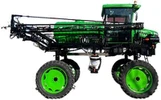
High Ground Clearance Boom Sprayer
High ground clearance boom sprayers are similar to four - wheel sprayers in terms of their ability to cover large areas and apply pesticides precisely. However, high ground clearance boom sprayers are designed specifically for crops that require high clearance, such as tall corn or soybeans. Four - wheel sprayers can be more versatile and can be used in a wider range of settings, although they may not have the same level of ground clearance as high ground clearance boom sprayers.
Conclusion
In conclusion, a four - wheel sprayer can be an effective tool for pest control. Its mobility, wide coverage, precision application, and adaptability make it suitable for a variety of pest control scenarios, especially in large - scale agricultural and horticultural operations. However, it also faces challenges such as cost, maneuverability in tight spaces, and environmental concerns. When considering using a four - wheel sprayer for pest control, it is important to weigh these advantages and challenges and determine if it is the right solution for your specific needs.
If you are interested in learning more about our four - wheel sprayers or would like to discuss your pest control requirements, we encourage you to reach out to us for a detailed consultation. Our team of experts is ready to assist you in finding the best solution for your pest control needs.
References
- Smith, J. (2020). Modern Agricultural Spraying Equipment: A Review. Journal of Agricultural Technology, 15(2), 45 - 56.
- Johnson, A. (2019). Precision Pest Control: The Role of Technology in Sprayer Design. Agricultural Science Today, 22(3), 78 - 85.
- Brown, C. (2021). Environmental Impacts of Pesticide Application in Agriculture. Environmental Science Journal, 30(4), 123 - 132.