In the ever - evolving landscape of modern agriculture, the use of bio - pesticides has gained significant traction due to their eco - friendly nature and reduced impact on the environment compared to traditional chemical pesticides. As a supplier of Boom Weed Sprayers, a common question I often encounter from farmers and agricultural enthusiasts is whether our boom weed sprayers can be used for spraying bio - pesticides. In this blog post, I will delve into the technical aspects, advantages, and potential challenges of using boom weed sprayers for bio - pesticide applications.


Technical Compatibility of Boom Weed Sprayers with Bio - Pesticides
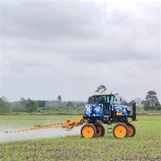
Boom weed sprayers are designed to distribute liquid substances evenly over a large area. They typically consist of a tank, a pump, a boom with nozzles, and a control system. From a technical perspective, most boom weed sprayers can be used for spraying bio - pesticides. The basic principle of operation remains the same regardless of whether it is a chemical pesticide or a bio - pesticide. The pump draws the liquid from the tank and forces it through the nozzles on the boom, creating a fine mist or spray pattern.
However, there are some key considerations. Bio - pesticides often have different physical and chemical properties compared to chemical pesticides. For example, they may be more viscous, contain suspended particles, or be more sensitive to temperature and pH. Our 700l Boom Sprayers are equipped with high - quality pumps and nozzles that can handle a wide range of liquid viscosities. The nozzles are designed to produce a consistent spray pattern, which is crucial for the effective application of bio - pesticides.
Advantages of Using Boom Weed Sprayers for Bio - Pesticide Application
Efficiency
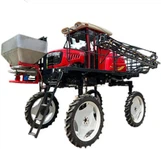
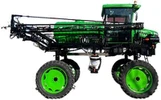
One of the primary advantages of using boom weed sprayers for bio - pesticide application is efficiency. Boom sprayers can cover large areas quickly, reducing the time and labor required for spraying. This is especially important in large - scale agricultural operations where time is of the essence. For example, a High Clearance Boom Sprayers can be used in tall crops such as corn or sugarcane, allowing for efficient spraying without causing damage to the plants.
Uniform Coverage
Boom weed sprayers are designed to provide uniform coverage of the sprayed area. This is essential for the effective control of pests and diseases using bio - pesticides. Uniform coverage ensures that all parts of the plant receive an adequate dose of the bio - pesticide, increasing its efficacy. The adjustable boom height and nozzle spacing on our sprayers allow farmers to customize the spray pattern according to the crop type and growth stage.
Reduced Environmental Impact
Bio - pesticides are already known for their low environmental impact. When used in conjunction with boom weed sprayers, the environmental benefits are further enhanced. The precise application of bio - pesticides using boom sprayers reduces the amount of product that is wasted or drifts into non - target areas. This helps to protect beneficial insects, soil microorganisms, and water sources.
Potential Challenges and Solutions
Clogging of Nozzles
As mentioned earlier, bio - pesticides may contain suspended particles, which can cause clogging of the nozzles. To address this issue, our boom weed sprayers are equipped with filters that can remove large particles before they reach the nozzles. Regular maintenance, such as cleaning the filters and nozzles, is also recommended to prevent clogging.
Compatibility with Tank Materials
Some bio - pesticides may be reactive with certain tank materials. It is important to ensure that the tank of the boom sprayer is made of a material that is compatible with the bio - pesticide being used. Our sprayers are available with tanks made of different materials, such as polyethylene or stainless steel, which are resistant to a wide range of chemicals and bio - pesticides.
Shelf Life and Storage
Bio - pesticides often have a shorter shelf life compared to chemical pesticides. It is crucial to store them properly and use them within the recommended time frame. Our sprayers are designed to be easy to clean and empty, which helps to prevent the accumulation of bio - pesticides in the tank and extends their shelf life.
Case Studies
To illustrate the effectiveness of using boom weed sprayers for bio - pesticide application, let's look at a few case studies. In a large - scale organic tomato farm, the use of our boom weed sprayers for applying a bio - pesticide based on Bacillus thuringiensis (Bt) resulted in a significant reduction in caterpillar damage. The uniform coverage provided by the boom sprayer ensured that all the tomato plants received an adequate dose of the bio - pesticide, leading to a higher yield and better quality tomatoes.
In another case, a vineyard used our high - clearance boom sprayers to apply a bio - pesticide for controlling powdery mildew. The adjustable boom height allowed the sprayer to reach all parts of the grapevines, and the fine mist produced by the nozzles ensured good adhesion of the bio - pesticide to the leaves. As a result, the incidence of powdery mildew was reduced, and the overall health of the vineyard improved.
Conclusion
In conclusion, boom weed sprayers can indeed be used for spraying bio - pesticides. They offer several advantages, including efficiency, uniform coverage, and reduced environmental impact. However, there are some potential challenges that need to be addressed, such as nozzle clogging and compatibility with tank materials. By choosing the right boom sprayer and following proper maintenance procedures, farmers can effectively use bio - pesticides to protect their crops and contribute to a more sustainable agricultural future.
If you are interested in learning more about our boom weed sprayers and their suitability for bio - pesticide application, or if you are looking to make a purchase, please feel free to contact us. We are always ready to assist you in finding the best solution for your agricultural needs.
References
- Smith, J. (2020). "Advances in Bio - Pesticide Technology." Journal of Agricultural Science.
- Brown, A. (2019). "Efficient Application of Bio - Pesticides in Modern Agriculture." Agricultural Engineering Review.
- Green, C. (2021). "Compatibility of Bio - Pesticides with Spraying Equipment." International Journal of Sustainable Agriculture.