As a seasoned supplier of four - wheel sprayers, one question I'm frequently asked is, "Can I adjust the spraying width of a four - wheel sprayer?" This query is not only common but also crucial for farmers and agricultural professionals, as the ability to adjust the spraying width can significantly impact the efficiency and effectiveness of their spraying operations.
The Basics of Four - Wheel Sprayers
Four - wheel sprayers are a staple in modern agriculture. They are designed to cover large areas quickly and evenly, applying pesticides, fertilizers, and other agricultural chemicals. These sprayers come in various sizes and configurations, from small, lightweight models suitable for small - scale farms to large, heavy - duty self - propelled units used on vast agricultural fields.
The spraying width of a four - wheel sprayer is determined by several factors, including the length of the boom, the number and spacing of the nozzles, and the pressure at which the liquid is sprayed. The boom is the horizontal arm of the sprayer that holds the nozzles. Longer booms generally allow for a wider spraying width.
Adjustability of Spraying Width
The good news is that, in most cases, the spraying width of a four - wheel sprayer can be adjusted. There are several methods to achieve this:
Manual Boom Folding
Many four - wheel sprayers are equipped with booms that can be manually folded. This allows the operator to reduce the spraying width when necessary, such as when spraying along the edges of a field or in areas with obstacles. For example, if you have a 20m Boom Sprayer and you need to spray a narrow strip, you can fold the outer sections of the boom to decrease the overall width.
Hydraulic Boom Adjustment
Some more advanced four - wheel sprayers feature hydraulic boom adjustment systems. These systems use hydraulic cylinders to extend or retract the boom sections, allowing for precise control of the spraying width. Hydraulic adjustment is particularly useful for large - scale operations where quick and accurate adjustments are required.
Nozzle Selection and Shut - off
Another way to adjust the spraying width is by selecting different nozzles or shutting off some of the nozzles. Nozzles come in various sizes and spray patterns, and choosing the right nozzle can affect the width and distribution of the spray. Additionally, many sprayers have the option to shut off individual nozzles or sections of nozzles, which can effectively reduce the spraying width.
Benefits of Adjustable Spraying Width
The ability to adjust the spraying width offers several benefits:
Increased Efficiency
By adjusting the spraying width to match the size and shape of the area being sprayed, farmers can avoid over - spraying and under - spraying. This not only saves time and resources but also ensures that the chemicals are applied evenly and effectively.


Flexibility
Adjustable spraying width allows farmers to adapt to different field conditions and crop types. For example, in a field with irregular boundaries or in a mixed - crop area, the ability to change the spraying width can make the spraying process much more manageable.
Cost Savings
Reducing over - spraying can lead to significant cost savings in terms of chemicals. By applying the right amount of chemicals in the right areas, farmers can minimize waste and lower their input costs.
Considerations When Adjusting Spraying Width
While adjusting the spraying width can be beneficial, there are some considerations to keep in mind:
Pressure and Flow Rate
When adjusting the spraying width, it's important to maintain the correct pressure and flow rate. Changing the number of nozzles or the boom length can affect the pressure and flow, which can in turn impact the spray pattern and coverage. Make sure to consult the sprayer's manual and adjust the pressure and flow rate accordingly.
Nozzle Wear and Maintenance
Regularly inspect and maintain the nozzles to ensure they are in good working condition. Worn or clogged nozzles can affect the spray pattern and width, leading to uneven application.
Environmental Factors
Environmental factors such as wind speed and direction can also affect the spraying width and distribution. It's important to choose the right time of day and weather conditions for spraying to minimize drift and ensure accurate application.
Different Types of Four - Wheel Sprayers and Their Spraying Width Adjustability
There are various types of four - wheel sprayers available on the market, each with its own features and capabilities regarding spraying width adjustment.
Agricultural Self - propelled Boom Sprayer
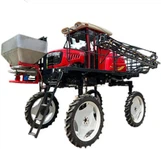
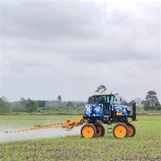
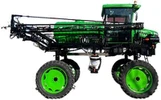
These large - scale sprayers are designed for extensive agricultural operations. They typically have long booms and advanced hydraulic or electronic control systems that allow for precise adjustment of the spraying width. Some models can even adjust the boom height and angle in addition to the width, providing maximum flexibility.
Small Boom Sprayer
Small boom sprayers are suitable for small - scale farms and orchards. While they may not have the same level of sophistication as large self - propelled sprayers, many small boom sprayers still offer some degree of spraying width adjustment, such as manual boom folding or nozzle shut - off options.
Conclusion
In conclusion, the answer to the question "Can I adjust the spraying width of a four - wheel sprayer?" is generally yes. Whether you're using a small - scale sprayer for a backyard garden or a large - scale self - propelled sprayer for commercial farming, there are usually options available to adjust the spraying width to meet your specific needs.
If you're in the market for a four - wheel sprayer or need more information about spraying width adjustment, I encourage you to reach out to us. We have a wide range of four - wheel sprayers with different features and capabilities, and our team of experts can help you choose the right sprayer for your operation. Contact us to start a procurement discussion and find the perfect solution for your agricultural spraying needs.
References
- Agricultural Sprayer Technology Handbook, various editions.
- Journal of Agricultural Engineering Research on sprayer design and operation.