The flow rate control of a sprayer in a Boom Sprayer 4WD 4WD Axle is a crucial aspect that directly impacts the efficiency and effectiveness of spraying operations. As a supplier of Boom Sprayer 4WD 4WD Axles, I have in - depth knowledge of how this system functions and its importance in the agricultural and industrial sectors.
Understanding the Basics of Flow Rate Control
Flow rate control refers to the ability to regulate the amount of liquid (usually pesticides, fertilizers, or other chemicals) that is sprayed per unit of time. In a Boom Sprayer 4WD 4WD Axle, this is essential for several reasons. Firstly, it ensures that the correct amount of chemical is applied to the target area. Over - spraying can lead to waste of chemicals, environmental pollution, and potential damage to crops. Under - spraying, on the other hand, may not provide sufficient protection or treatment, resulting in poor crop yields.
The flow rate is typically measured in liters per minute (L/min) or gallons per minute (GPM). The ideal flow rate depends on various factors such as the type of crop, the stage of growth, the type of chemical being used, and the width of the spray boom.
Components Involved in Flow Rate Control
- Pump: The pump is the heart of the sprayer system. It creates the pressure needed to move the liquid from the tank through the hoses and nozzles. There are different types of pumps used in Boom Sprayer 4WD 4WD Axles, such as diaphragm pumps, centrifugal pumps, and piston pumps. Each type has its own characteristics in terms of pressure generation, flow rate capacity, and durability. For example, diaphragm pumps are known for their ability to handle abrasive chemicals and provide a consistent flow rate, while centrifugal pumps are often used for high - volume applications.
- Nozzles: Nozzles play a vital role in determining the flow rate and the pattern of the spray. Different nozzles have different flow rates at a given pressure. The size of the nozzle orifice, the shape of the nozzle, and the spray angle all affect the amount of liquid that is released. For instance, a larger orifice will generally result in a higher flow rate, but it may also produce a coarser spray pattern. Nozzles are available in various types, including flat - fan nozzles, cone - shaped nozzles, and adjustable nozzles.
- Flow Meters: Flow meters are used to measure the actual flow rate of the liquid passing through the system. They provide real - time information that can be used to adjust the flow rate as needed. There are different types of flow meters, such as mechanical flow meters, ultrasonic flow meters, and electromagnetic flow meters. Mechanical flow meters are relatively simple and cost - effective, while ultrasonic and electromagnetic flow meters offer higher accuracy and are suitable for more precise applications.
- Control Valves: Control valves are used to regulate the flow of liquid in the system. They can be manually operated or electronically controlled. Manual control valves are often used in smaller sprayers or for basic flow rate adjustments. Electronic control valves, on the other hand, can be integrated with the tractor's control system and allow for more precise and automated flow rate control. For example, they can adjust the flow rate based on the speed of the tractor, ensuring a consistent application rate across the field.
How the Flow Rate Control System Works
The flow rate control system in a Boom Sprayer 4WD 4WD Axle operates through a combination of these components. The process typically starts with the pump drawing the liquid from the tank and creating pressure. The liquid then flows through the hoses and into the manifold, where it is distributed to the individual nozzles.


The flow meter measures the flow rate of the liquid at a certain point in the system. This information is sent to the control unit, which can be a simple control panel or a more sophisticated electronic control system. If the measured flow rate is different from the desired flow rate, the control unit will adjust the control valve accordingly.
For example, if the tractor speed increases, the flow rate may need to be increased to maintain a consistent application rate per unit area. The control unit will detect the change in speed (usually through a speed sensor on the tractor) and open the control valve slightly to allow more liquid to flow through the system. Conversely, if the tractor speed decreases, the control unit will close the control valve to reduce the flow rate.
Importance of Calibration
Calibration is a critical step in ensuring accurate flow rate control. Before each spraying operation, the sprayer should be calibrated to ensure that the actual flow rate matches the desired flow rate. This involves measuring the amount of liquid sprayed over a known area and comparing it to the expected amount.
To calibrate the sprayer, the operator needs to know the width of the spray boom, the speed of the tractor, and the desired application rate. The operator can then measure the time it takes to spray a known volume of liquid and calculate the actual flow rate. If the actual flow rate is different from the desired flow rate, the operator can adjust the nozzle size, the pump pressure, or the control valve settings.
Impact of Axle Design on Flow Rate Control
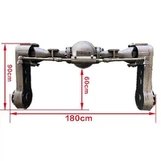
The 4WD 4WD Axle design of the Boom Sprayer also has an impact on flow rate control. A well - designed axle provides stability and smooth movement of the sprayer across the field. This is important because any sudden jolts or vibrations can affect the flow rate. For example, if the sprayer bounces too much, the nozzles may not be able to maintain a consistent spray pattern, and the flow rate may fluctuate.
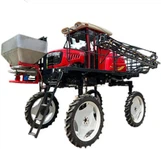
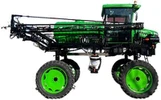
Our Boom Sprayer 4WD 4WD Axle is designed to provide excellent stability and shock absorption. It allows the sprayer to move smoothly over uneven terrain, ensuring that the flow rate control system can operate effectively. Additionally, the raised chassis design, such as our Boom Sprayer Raised Chassis, provides better ground clearance, reducing the risk of damage to the sprayer components and maintaining a consistent flow rate.
Advantages of Our Boom Sprayer 4WD 4WD Axle in Flow Rate Control
- Precision Engineering: Our Boom Sprayer 4WD 4WD Axle is built with precision engineering techniques. The components are carefully selected and assembled to ensure optimal performance. This results in a more accurate and consistent flow rate control, reducing the risk of over - or under - spraying.
- Advanced Control Systems: We incorporate advanced electronic control systems in our sprayers. These systems can monitor and adjust the flow rate in real - time, based on various factors such as tractor speed, pressure, and nozzle performance. This allows for a more efficient and effective spraying operation.
- Compatibility: Our sprayers are designed to be compatible with a wide range of nozzles and pumps. This gives the operator the flexibility to choose the components that best suit their specific spraying needs, further enhancing the flow rate control capabilities.
Conclusion
In conclusion, the flow rate control of a sprayer in a Boom Sprayer 4WD 4WD Axle is a complex but essential process. It involves multiple components working together to ensure that the correct amount of liquid is sprayed at the right time and in the right place. As a supplier of Boom Sprayer 4WD 4WD Axle, we are committed to providing high - quality products that offer excellent flow rate control capabilities.
If you are in the market for a reliable and efficient Boom Sprayer 4WD 4WD Axle, we encourage you to contact us for more information. Our team of experts can help you choose the right sprayer for your needs and provide you with the necessary support for installation, calibration, and maintenance.
References
- "Sprayer Technology and Calibration" by the American Society of Agricultural and Biological Engineers (ASABE).
- "Agricultural Sprayers: Principles and Practices" by various authors in the field of agricultural engineering.