Calibrating the spraying volume of a four-wheel sprayer is a crucial task for ensuring efficient and effective agricultural operations. As a four-wheel sprayer supplier, I understand the importance of accurate calibration to achieve optimal results in crop protection and fertilization. In this blog post, I will share some practical steps and tips on how to calibrate the spraying volume of a four-wheel sprayer.
Understanding the Basics of Spraying Volume Calibration
Before diving into the calibration process, it's essential to understand the basic concepts related to spraying volume. The spraying volume is typically measured in liters per hectare (L/ha) or gallons per acre (gal/ac). It represents the amount of liquid (such as pesticides, herbicides, or fertilizers) that is applied to a specific area of land.
Several factors can affect the spraying volume, including the sprayer's nozzle type, pressure, speed, and boom width. Therefore, accurate calibration is necessary to ensure that the correct amount of liquid is applied uniformly across the field.
Step 1: Gather the Necessary Tools and Materials
To calibrate the spraying volume of a four-wheel sprayer, you will need the following tools and materials:
- Measuring containers: You will need containers to collect the sprayed liquid. These containers should be accurately calibrated to measure the volume of the collected liquid.
- Stopwatch: A stopwatch is required to measure the time taken to cover a specific distance.
- Measuring tape: A measuring tape is used to measure the distance traveled by the sprayer.
- Calculator: A calculator will help you perform the necessary calculations to determine the spraying volume.
Step 2: Check the Sprayer's Nozzles
The first step in the calibration process is to check the sprayer's nozzles. Nozzles play a crucial role in determining the spraying pattern and volume. Make sure that all the nozzles are clean, undamaged, and properly installed. Clogged or damaged nozzles can affect the spraying volume and pattern, leading to uneven application of the liquid.
You can check the nozzles by running the sprayer without any liquid in the tank. Observe the spraying pattern and make sure that it is uniform across the boom. If you notice any irregularities, clean or replace the affected nozzles.
Step 3: Determine the Test Area
Next, you need to determine the test area. The test area should be a representative section of the field where you will be using the sprayer. It should be flat, free of obstacles, and have a uniform crop density.
Measure the length and width of the test area using a measuring tape. Calculate the area of the test area in square meters or acres. For example, if the test area is 100 meters long and 10 meters wide, the area is 1000 square meters or 0.1 hectares.
Step 4: Measure the Travel Speed
To measure the travel speed of the sprayer, mark a specific distance on the test area, such as 100 meters. Start the sprayer and drive it at a constant speed over the marked distance while using a stopwatch to measure the time taken.
Calculate the travel speed using the following formula:
Speed (km/h) = Distance (km) / Time (h)
For example, if the sprayer covers a distance of 100 meters in 20 seconds, the travel speed is:
Speed (km/h) = (100 / 1000) / (20 / 3600) = 18 km/h
Step 5: Measure the Spraying Volume
Once you have determined the travel speed, it's time to measure the spraying volume. Place the measuring containers under the nozzles at regular intervals along the boom. Start the sprayer and run it for a specific period, such as 1 minute, while maintaining the same travel speed as in the previous step.
Collect the sprayed liquid in the measuring containers and measure the volume of the collected liquid in each container. Calculate the average volume of the collected liquid per nozzle.
Step 6: Calculate the Spraying Volume per Hectare
To calculate the spraying volume per hectare, you need to use the following formula:
Spraying volume (L/ha) = (Average volume per nozzle (L) x Number of nozzles x 10000) / (Nozzle spacing (m) x Distance traveled (m))
For example, if the average volume per nozzle is 0.5 liters, the number of nozzles is 20, the nozzle spacing is 0.5 meters, and the distance traveled is 100 meters, the spraying volume per hectare is:
Spraying volume (L/ha) = (0.5 x 20 x 10000) / (0.5 x 100) = 200 L/ha
Step 7: Adjust the Spraying Volume if Necessary
If the calculated spraying volume is different from the desired spraying volume, you will need to adjust the sprayer settings. You can adjust the spraying volume by changing the nozzle type, pressure, or speed.
For example, if the calculated spraying volume is too high, you can reduce the pressure or increase the travel speed. If the calculated spraying volume is too low, you can increase the pressure or decrease the travel speed.


Step 8: Repeat the Calibration Process
After making the necessary adjustments, repeat the calibration process to ensure that the spraying volume is within the desired range. It's important to calibrate the sprayer regularly, especially if you change the nozzle type, pressure, or speed.
Tips for Accurate Spraying Volume Calibration
- Always follow the manufacturer's instructions when calibrating the sprayer.
- Use high-quality measuring containers and tools to ensure accurate measurements.
- Calibrate the sprayer in a flat and open area to avoid any interference.
- Make sure that the sprayer is in good working condition before starting the calibration process.
- Keep a record of the calibration results for future reference.
Conclusion
Calibrating the spraying volume of a four-wheel sprayer is a critical step in ensuring efficient and effective agricultural operations. By following the steps outlined in this blog post, you can accurately calibrate the spraying volume and achieve optimal results in crop protection and fertilization.
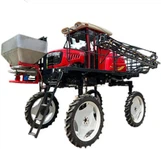
As a four-wheel sprayer supplier, we offer a wide range of high-quality sprayers, including Agricultural Self-propelled Boom Sprayer, 12m Boom Sprayer, and High Ground Clearance Boom Sprayer. Our sprayers are designed to provide accurate and uniform spraying, helping you to save time and money while improving crop yields.
If you are interested in purchasing a four-wheel sprayer or have any questions about sprayer calibration, please feel free to contact us. We are always ready to assist you with your agricultural needs.
References
- "Sprayer Calibration Guide" - Extension Service, University of [University Name]
- "Principles of Sprayer Calibration" - Agricultural Engineering Department, [University Name]