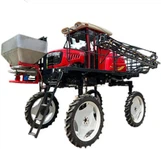
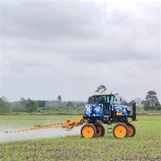
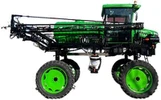
Hey there! As a supplier of agricultural boom sprayers, I often get asked about how to measure the spraying volume of these machines. It's a crucial aspect of using an agricultural boom sprayer effectively, whether you're dealing with Front Boom Self-propelled Sprayers, Hydraulic Boom Sprayers, or Boom Weed Sprayers. In this blog, I'll share some practical ways to measure the spraying volume, so you can make the most of your equipment.
Why Measuring Spraying Volume Matters
Before we dive into the methods, let's talk about why it's so important to measure the spraying volume. First off, accurate spraying volume ensures that you're applying the right amount of pesticides, fertilizers, or other chemicals to your crops. If you spray too little, the treatment might not be effective, and your crops could still be at risk from pests or nutrient deficiencies. On the other hand, if you spray too much, you're not only wasting money on the excess chemicals but also potentially harming the environment and your crops.
Secondly, measuring the spraying volume helps you calibrate your boom sprayer correctly. Different crops and fields may require different spraying volumes, and by measuring and adjusting accordingly, you can optimize the performance of your sprayer and get better results.
Method 1: Using a Flow Meter
One of the most straightforward ways to measure the spraying volume is by using a flow meter. A flow meter is a device that measures the volume of liquid flowing through a pipe or hose. Most modern agricultural boom sprayers come with built - in flow meters, but if yours doesn't, you can easily install one.
Here's how you can use a flow meter to measure the spraying volume:
- Set up the sprayer: Fill your boom sprayer's tank with water (or the chemical solution you'll be using). Make sure the sprayer is in good working condition, and all the nozzles are clean and functioning properly.
- Turn on the sprayer: Start the pump and let the sprayer run for a few minutes to stabilize the flow.
- Read the flow meter: The flow meter will display the volume of liquid flowing through the system per unit of time, usually in liters per minute (L/min) or gallons per minute (GPM). Note down this value.
- Calculate the spraying volume: To calculate the total spraying volume for a given area, you need to know the spraying width of your boom sprayer and the speed at which you're traveling. For example, if your flow meter reads 10 L/min, your spraying width is 10 meters, and you're traveling at a speed of 5 kilometers per hour, you can calculate the spraying volume per hectare.
First, convert the speed from kilometers per hour to meters per minute: 5 km/h = 5000 m / 60 min ≈ 83.3 m/min.
The area covered per minute is the spraying width times the distance traveled per minute: 10 m × 83.3 m/min = 833 m²/min.
To convert this to hectares (1 hectare = 10,000 m²), divide by 10,000: 833 m²/min ÷ 10,000 = 0.0833 hectares/min.
The spraying volume per hectare is then the flow rate divided by the area covered per minute: 10 L/min ÷ 0.0833 hectares/min ≈ 120 L/ha.
Method 2: Collecting Spray Samples
If you don't have a flow meter, you can still measure the spraying volume by collecting spray samples. This method is a bit more time - consuming but can be just as accurate.
Here's what you need to do:
- Prepare collection containers: You'll need a series of small containers, such as graduated cylinders or measuring cups. Place these containers at regular intervals along the spraying width of your boom sprayer. Make sure they're positioned in a way that they can catch the spray from the nozzles.
- Run the sprayer: Start the sprayer and let it run for a set period of time, say 1 minute.
- Collect the samples: After the set time, collect the liquid from each container and measure the volume in each one.
- Calculate the average volume per nozzle: Add up the volumes from all the containers and divide by the number of containers. This gives you the average volume of spray collected per nozzle.
- Calculate the total spraying volume: Multiply the average volume per nozzle by the number of nozzles on your boom sprayer. Then, multiply this value by the number of times you'll need to refill the tank to cover your entire field.
For example, if the average volume per nozzle is 50 ml, and you have 20 nozzles on your boom sprayer, the total volume per spraying cycle is 50 ml × 20 = 1000 ml or 1 L. If you need to refill the tank 10 times to cover your field, the total spraying volume is 1 L × 10 = 10 L.
Method 3: Using a Catch Can Test
The catch can test is another popular method for measuring the spraying volume, especially for small - scale or homemade boom sprayers.
Here's how it works:


- Set up the catch cans: Place a series of catch cans (small containers) at regular intervals under the nozzles of your boom sprayer. Make sure the catch cans are level and positioned directly under the nozzles.
- Run the sprayer: Start the sprayer and let it run for a known period of time, for example, 30 seconds.
- Measure the collected liquid: After the set time, measure the volume of liquid in each catch can using a measuring device, such as a syringe or a graduated cylinder.
- Calculate the flow rate per nozzle: Divide the volume of liquid collected in each catch can by the time the sprayer was running. This gives you the flow rate per nozzle in milliliters per second (ml/s) or other appropriate units.
- Determine the total spraying volume: Multiply the flow rate per nozzle by the number of nozzles on your boom sprayer and the time you'll be spraying to cover your field.
Factors Affecting Spraying Volume
It's important to note that several factors can affect the spraying volume of your boom sprayer. These include:
- Nozzle type and size: Different nozzles have different flow rates and spray patterns. The size and type of nozzle you use will significantly impact the spraying volume. Make sure you choose the right nozzles for your specific application.
- Pressure: The pressure at which the sprayer operates also affects the flow rate. Higher pressure generally results in a higher spraying volume, but it can also affect the droplet size and spray pattern.
- Speed of travel: The faster you travel while spraying, the less time the nozzles have to deposit the liquid, resulting in a lower spraying volume per unit area.
Calibrating Your Sprayer Based on the Measurements
Once you've measured the spraying volume, you may need to calibrate your boom sprayer to achieve the desired spraying volume for your crops. If the measured volume is too high or too low, you can make adjustments in the following ways:
- Adjust the pressure: If the spraying volume is too low, you can increase the pressure by adjusting the pressure regulator on your sprayer. If it's too high, decrease the pressure.
- Change the nozzles: If adjusting the pressure doesn't give you the desired results, you may need to change the nozzles. For example, if you need a higher spraying volume, you can use larger - sized nozzles.
- Adjust the speed of travel: You can also adjust the speed at which you're traveling while spraying. Slowing down will increase the spraying volume per unit area, while speeding up will decrease it.
Conclusion
Measuring the spraying volume of an agricultural boom sprayer is an essential part of using the equipment effectively. Whether you use a flow meter, collect spray samples, or perform a catch can test, the key is to be accurate and consistent in your measurements. By doing so, you can ensure that you're applying the right amount of chemicals to your crops, saving money, and protecting the environment.
If you're in the market for a new agricultural boom sprayer or need help with calibration and measurement, don't hesitate to reach out. We're here to assist you in finding the best solution for your farming needs. Contact us to start a procurement discussion and take your farming operations to the next level.
References
- "Agricultural Sprayer Calibration Manual" - Agricultural Extension Services
- "Spraying Systems Handbook" - Spraying Systems Co.
- "Crop Protection and Pest Management Handbook" - Various Agricultural Universities