When it comes to agricultural spraying, there are various types of sprayers available in the market, each with its own set of features, advantages, and limitations. As a supplier of Manual Boom Sprayers, I have in - depth knowledge about the differences between manual boom sprayers and other types of sprayers. In this blog, I'll take you through a detailed comparison to help you understand which type of sprayer might be the best fit for your agricultural needs.
Manual Boom Sprayers
Manual boom sprayers are a traditional and straightforward solution for small - to medium - sized agricultural fields, gardens, and orchards. These sprayers are operated by hand, meaning that the user manually pumps a lever or handle to build up pressure in the tank. Once the pressure is sufficient, the liquid (such as pesticides, fertilizers, or herbicides) is forced through the boom and out of the nozzles, covering the targeted area.
One of the primary advantages of manual boom sprayers is their simplicity. They have a relatively uncomplicated design, which makes them easy to operate, maintain, and repair. There are no complex electrical or hydraulic systems to worry about, so even farmers with limited technical knowledge can use them effectively. Additionally, manual boom sprayers are highly portable. They are often lightweight and can be carried around the field without the need for a large vehicle or machinery. This makes them ideal for small farms or areas with difficult terrain where larger sprayers may not be able to access.


However, manual boom sprayers also have some limitations. The spraying capacity is relatively low compared to other types of sprayers. Since the pressure is generated manually, it can be challenging to maintain a consistent pressure over a large area. This may result in uneven spraying, with some areas receiving more liquid than others. Also, manual operation can be labor - intensive, especially for large - scale spraying tasks. The user has to continuously pump the handle to keep the pressure up, which can be tiring and time - consuming.
Hydraulic Boom Sprayers
Hydraulic Boom Sprayers are powered by a hydraulic system, which is typically connected to a tractor or other agricultural machinery. The hydraulic power is used to drive a pump, which generates the pressure needed to spray the liquid.
One of the significant advantages of hydraulic boom sprayers is their high - pressure and large - capacity spraying ability. They can cover a large area quickly and efficiently, making them suitable for large - scale farms. The hydraulic system allows for better control of the pressure, resulting in more uniform spraying. This is crucial for ensuring that pesticides or fertilizers are applied evenly across the field, which can improve crop yields and reduce waste.
In addition, hydraulic boom sprayers can be adjusted to different spraying widths and pressures, depending on the specific requirements of the crop and the field. This flexibility makes them a versatile option for various agricultural applications. However, hydraulic boom sprayers are more complex and expensive than manual boom sprayers. They require a compatible tractor or other power source, and the hydraulic system needs regular maintenance to ensure proper functioning. Any issues with the hydraulic system can be costly and time - consuming to repair.
High Clearance Boom Sprayers
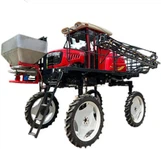
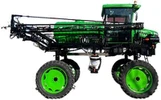
High Clearance Boom Sprayers are designed specifically for crops that grow tall, such as corn or sugarcane. These sprayers have a high - clearance chassis, which allows them to drive over the crops without damaging them while spraying.
The main advantage of high - clearance boom sprayers is their ability to spray tall crops at different growth stages. They can reach the upper parts of the plants, ensuring that pesticides and fertilizers are applied effectively. The high - clearance design also reduces the risk of soil compaction, as the sprayer can move between the rows of crops without driving on the soil.
However, high - clearance boom sprayers are relatively large and expensive machines. They are not suitable for small - scale farms due to their high cost and large size. Also, they require a certain level of skill to operate, especially when maneuvering in the field to avoid damaging the crops.
Cost Comparison
Cost is an important factor when choosing a sprayer. Manual boom sprayers are the most affordable option. They have a low upfront cost, and the maintenance cost is also minimal. This makes them a great choice for small - scale farmers or those on a tight budget.
Hydraulic boom sprayers are more expensive. The cost of the sprayer itself, along with the need for a compatible tractor and hydraulic system, can be quite high. In addition, the maintenance and repair costs are also relatively high due to the complexity of the hydraulic components.
High - clearance boom sprayers are the most expensive of the three. Their specialized design and large size contribute to the high cost. The initial investment, as well as the cost of operation and maintenance, can be a significant barrier for many farmers.
Environmental Impact
From an environmental perspective, manual boom sprayers have a relatively low impact. Since they are manually operated, they do not consume fuel or electricity, which reduces greenhouse gas emissions. However, the potential for uneven spraying may lead to over - application of chemicals in some areas, which can have a negative impact on the environment.
Hydraulic boom sprayers, on the other hand, rely on tractors or other machinery that consume fuel. This contributes to air pollution and greenhouse gas emissions. However, their ability to spray more evenly can reduce the overall amount of chemicals used, which can be beneficial for the environment in the long run.
High - clearance boom sprayers also consume fuel, but their design can reduce soil compaction, which is beneficial for soil health. However, their large size and high - power operation may have a more significant impact on the environment compared to manual boom sprayers.
Conclusion
In conclusion, the choice between manual boom sprayers, hydraulic boom sprayers, and high - clearance boom sprayers depends on several factors, including the size of the farm, the type of crops, the budget, and the specific spraying requirements. Manual boom sprayers are a simple, affordable, and portable option for small - scale applications. Hydraulic boom sprayers offer high - capacity and uniform spraying for large - scale farms. High - clearance boom sprayers are specialized for tall crops.
If you are a small - scale farmer or have a limited budget, a manual boom sprayer might be the best choice for you. Our company offers a wide range of high - quality Manual Boom Sprayers that are designed to meet your specific needs. We are committed to providing excellent products and customer service. If you are interested in learning more about our manual boom sprayers or would like to discuss your spraying requirements, please feel free to contact us for procurement and further discussions.
References
- Smith, J. (2020). Agricultural Spraying Equipment: A Comprehensive Guide. Agricultural Press.
- Johnson, M. (2019). Comparing Different Types of Boom Sprayers. Journal of Agricultural Machinery, 15(2), 45 - 52.