In the realm of modern agriculture, the efficiency and precision of crop spraying operations are crucial for maximizing yields and minimizing costs. Among the various types of sprayers available, hydraulic boom sprayers have emerged as a popular choice due to their superior performance and ease of control. As a leading supplier of Hydraulic Boom Sprayers, I am excited to delve into the concept of ease of control in hydraulic boom sprayers and explore how it benefits farmers and agricultural professionals.
Understanding Hydraulic Boom Sprayers
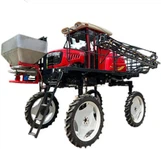
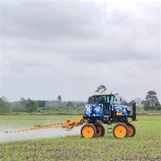
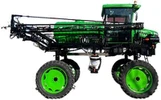
Before we discuss the ease of control, let's briefly understand what hydraulic boom sprayers are. These sprayers are equipped with a boom, which is a long, horizontal arm that extends over the crops. The boom is fitted with multiple nozzles that distribute the spray evenly across the field. Hydraulic systems are used to power the movement of the boom, allowing for precise control over the spraying operation.
Key Features Contributing to Ease of Control
1. Hydraulic Boom Movement
One of the primary factors that make hydraulic boom sprayers easy to control is the ability to manipulate the boom's movement. Hydraulic cylinders are used to raise, lower, and angle the boom, providing flexibility in adjusting the spraying height and width. This feature is particularly useful when spraying crops of different heights or when navigating around obstacles in the field. For example, if you encounter a row of tall trees or a water channel, you can quickly adjust the boom height to avoid spraying in unwanted areas.
2. Variable Rate Technology (VRT)
Many modern hydraulic boom sprayers are equipped with Variable Rate Technology (VRT). This advanced feature allows farmers to adjust the spraying rate based on the specific needs of different areas within the field. By using GPS and mapping technology, the sprayer can automatically adjust the flow rate of the nozzles as it moves across the field. This not only ensures that each area receives the right amount of spray but also helps to reduce waste and save on chemical costs. For instance, if a particular section of the field has a higher weed density, the sprayer can increase the spraying rate in that area while maintaining a lower rate in other parts.
3. Automatic Section Control
Another important feature that enhances the ease of control is automatic section control. This system divides the boom into multiple sections, and each section can be independently controlled. When the sprayer approaches an area that does not require spraying, such as a headland or a buffer zone, the corresponding section of the boom can be automatically shut off. This prevents overspraying and reduces the risk of chemical drift, which can be harmful to the environment and neighboring crops. For example, when turning at the end of a row, the outer sections of the boom can be turned off to avoid spraying outside the field.
4. User-Friendly Interface
Most hydraulic boom sprayers are designed with a user-friendly interface that makes it easy for operators to control the various functions of the sprayer. The interface typically includes a display screen that shows important information such as spraying rate, boom position, and tank level. Operators can use a joystick or a touchscreen to adjust the settings and monitor the spraying operation in real-time. This intuitive design reduces the learning curve for new operators and allows for quick and efficient operation.
Comparison with Other Types of Sprayers
To better understand the ease of control of hydraulic boom sprayers, let's compare them with Manual Boom Sprayers and ATV Sprayers with Booms.
Manual Boom Sprayers
Manual boom sprayers require operators to manually adjust the boom's height and angle using levers or cranks. This can be time-consuming and labor-intensive, especially when spraying large fields. In addition, manual adjustment is often less precise than hydraulic control, which can lead to uneven spraying and overspraying. Hydraulic boom sprayers, on the other hand, offer quick and precise control, allowing for more efficient and accurate spraying operations.
ATV Sprayers with Booms
ATV sprayers with booms are typically smaller and more portable than hydraulic boom sprayers. While they are suitable for small-scale spraying operations, they may lack the advanced features and control options of hydraulic boom sprayers. For example, ATV sprayers may not have automatic section control or Variable Rate Technology, which can limit their effectiveness in large fields. Hydraulic boom sprayers, with their superior control capabilities, are better suited for commercial farming operations where efficiency and precision are essential.


Benefits of Ease of Control in Hydraulic Boom Sprayers
1. Increased Efficiency
The ease of control in hydraulic boom sprayers translates into increased efficiency in spraying operations. With precise control over the boom's movement and spraying rate, operators can cover more ground in less time. This allows farmers to complete their spraying tasks faster, especially during the peak growing season when time is of the essence.
2. Improved Spraying Quality
The ability to adjust the boom height, angle, and spraying rate ensures that the spray is applied evenly and accurately across the field. This results in better coverage and more effective pest and weed control. By reducing the risk of under - or over - spraying, hydraulic boom sprayers help to improve the overall quality of the crop.
3. Cost Savings
Efficient spraying operations not only save time but also reduce costs. By using Variable Rate Technology and automatic section control, farmers can minimize the amount of chemicals used, which leads to significant savings on chemical purchases. Additionally, the reduced risk of overspraying and chemical drift helps to protect the environment and avoid potential legal issues.
Real - World Applications
Hydraulic boom sprayers are widely used in various agricultural applications, including large - scale crop farming, orchards, and vineyards. In large - scale crop farming, such as wheat, corn, and soybean production, the ability to quickly and accurately spray large areas is crucial for maximizing yields. In orchards and vineyards, the flexibility of the boom's movement allows for precise spraying around trees and vines, ensuring that the spray reaches the target areas without causing damage.
Conclusion
In conclusion, the ease of control is one of the most significant advantages of hydraulic boom sprayers. The combination of hydraulic boom movement, Variable Rate Technology, automatic section control, and a user - friendly interface makes these sprayers highly efficient, precise, and cost - effective. Whether you are a small - scale farmer or a large - scale commercial grower, investing in a hydraulic boom sprayer can significantly improve your spraying operations and contribute to the success of your agricultural business.
If you are interested in learning more about our Hydraulic Boom Sprayers or discussing your specific spraying needs, we invite you to contact us for a detailed consultation. Our team of experts is ready to assist you in selecting the right sprayer for your farm and providing you with the support you need to achieve optimal results.
References
- Agricultural Spraying Technology: Principles and Practices. John Wiley & Sons.
- Precision Agriculture: Technologies and Applications. Springer.
- Modern Farm Machinery and Equipment. Elsevier.