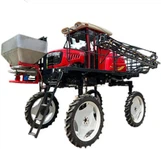
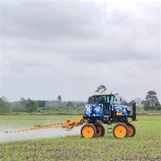
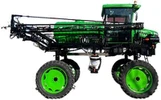
The turning radius of a boom sprayer is a critical factor that significantly affects its maneuverability and efficiency in agricultural operations. As a leading boom sprayer axle supplier, I have witnessed firsthand how the design and characteristics of the boom sprayer axle can have a profound impact on the turning radius. In this blog, I will delve into the various aspects of how the boom sprayer axle influences the turning radius, exploring the underlying principles and practical implications.

Understanding the Basics of Turning Radius
Before we discuss the impact of the boom sprayer axle on the turning radius, it is essential to understand what the turning radius is. The turning radius of a vehicle is the smallest circle within which it can turn. In the context of a boom sprayer, a smaller turning radius means that the sprayer can make tighter turns, which is particularly useful in fields with irregular shapes, narrow rows, or obstacles. This allows for more efficient spraying operations, reducing the amount of unsprayed areas and minimizing the time and effort required to navigate the field.
Axle Design and Turning Radius
The design of the boom sprayer axle plays a crucial role in determining the turning radius. There are several key design elements that can affect the turning ability of the sprayer:
Axle Configuration
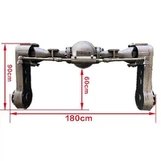
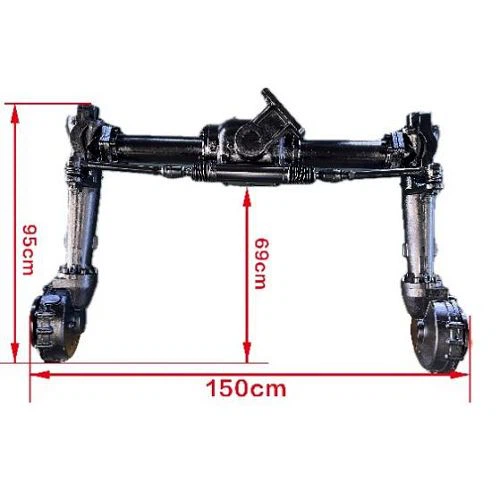
The configuration of the axles, such as the number of axles and their arrangement, can have a significant impact on the turning radius. For example, a Boom Sprayer Axle 4×4 provides better traction and stability, but it may also have a larger turning radius compared to a two - axle sprayer. The additional axles increase the overall length of the sprayer, which can make it more difficult to make tight turns. On the other hand, a well - designed 4×4 axle system can distribute the weight evenly, allowing for better control during turns and potentially reducing the turning radius in some cases.
Steering Mechanism
The steering mechanism associated with the axle is another important factor. Most boom sprayers use either a front - wheel steering or a four - wheel steering system. In a front - wheel steering system, the front axle is responsible for steering the vehicle. This system is relatively simple and common, but it may result in a larger turning radius, especially for larger sprayers. Four - wheel steering systems, on the other hand, allow both the front and rear axles to steer. This can significantly reduce the turning radius, as the rear wheels can follow a different path than the front wheels, enabling the sprayer to make tighter turns. Boom Sprayer 4WD 4WD Axle often comes with advanced four - wheel steering capabilities, which can enhance the maneuverability of the sprayer in the field.
Axle Length
The length of the axle also affects the turning radius. A longer axle means that the wheels are farther apart, which can increase the turning radius. This is because the outer wheels have to travel a greater distance during a turn. In some cases, manufacturers may design Boom Sprayer Raised Axle to provide more ground clearance, but this may also increase the axle length and potentially the turning radius. However, careful engineering can help to optimize the axle length to balance ground clearance and turning ability.
Suspension System and Turning Radius
The suspension system of the boom sprayer, which is connected to the axles, can also influence the turning radius. A good suspension system helps to keep the wheels in contact with the ground, providing better traction and stability during turns. If the suspension is too stiff, the sprayer may have a harder time adapting to uneven terrain, which can affect the turning performance. On the other hand, a too - soft suspension may cause excessive body roll during turns, reducing the vehicle's stability and potentially increasing the turning radius.
Tire Selection and Turning Radius
The tires used on the boom sprayer axles are another factor that impacts the turning radius. Tires with a larger diameter can increase the turning radius, as they cover more ground per revolution. However, larger tires may also provide better traction and flotation, which can be beneficial in certain field conditions. Additionally, the tire tread pattern can affect the turning ability. Tires with a more aggressive tread pattern may provide better grip during turns, allowing for sharper turns and a smaller turning radius.
Practical Implications for Agricultural Operations
The impact of the boom sprayer axle on the turning radius has several practical implications for agricultural operations. A smaller turning radius means that the sprayer can operate more efficiently in fields with complex layouts. It can reduce the amount of time spent on turning maneuvers, increasing the overall spraying speed. This is especially important in large - scale farming operations where time is of the essence.
Moreover, a sprayer with a smaller turning radius can minimize the damage to crops. When making wide turns, the sprayer may come into contact with more plants, causing physical damage. By making tighter turns, the sprayer can avoid unnecessary contact with the crops, protecting the yield.
Case Studies
To illustrate the importance of the boom sprayer axle's impact on the turning radius, let's consider a few case studies. In a small - scale orchard with narrow rows, a boom sprayer with a large turning radius may have difficulty navigating between the trees. By upgrading to a sprayer with a Boom Sprayer 4WD 4WD Axle and a four - wheel steering system, the farmer can significantly reduce the turning radius, allowing for more efficient spraying operations and less damage to the trees.
In a large - scale field with irregular boundaries, a sprayer with an optimized axle design and suspension system can make the most of the available space. The ability to make tight turns at the edges of the field ensures that all areas are covered, reducing the amount of unsprayed land and increasing the overall productivity of the farm.
Conclusion
In conclusion, the boom sprayer axle has a significant impact on the turning radius of the sprayer. Axle design, suspension system, tire selection, and other factors all contribute to the turning ability of the sprayer. As a boom sprayer axle supplier, we understand the importance of these factors and are committed to providing high - quality axles that optimize the turning radius and overall performance of the sprayer.
If you are looking to improve the maneuverability of your boom sprayer and reduce its turning radius, we invite you to contact us for more information. Our team of experts can help you select the right axle for your specific needs and provide you with the best solutions for your agricultural operations.
References
- Agricultural Machinery Design and Engineering Handbook.
- Journal of Agricultural Engineering Research on Sprayer Maneuverability.
- Case Studies in Modern Agricultural Spraying Technologies.