As a provider of small boom sprayers, I'm often asked about the spraying angle range of these essential agricultural tools. Understanding the appropriate spraying angle range is crucial for achieving effective and efficient spraying operations in various agricultural scenarios.


The Basics of Spraying Angle in Small Boom Sprayers
The spraying angle of a small boom sprayer refers to the angle at which the nozzles disperse the liquid, typically pesticides, herbicides, or fertilizers. This angle plays a significant role in determining the coverage area, droplet size, and the overall distribution of the sprayed material.
Factors Influencing the Spraying Angle Range
Crop Type and Height
Different crops have different requirements when it comes to spraying. For low - growing crops such as lettuce or strawberries, a wider spraying angle might be more suitable to ensure broad coverage. A wider angle, say 110 - 120 degrees, can spread the spray across a larger area close to the ground, reaching the leaves and stems of the low - lying plants effectively.
On the other hand, taller crops like corn or sunflowers may need a more targeted spraying angle. An angle in the range of 60 - 90 degrees can direct the spray towards the upper parts of the plants, where pests and diseases are often more prevalent.
Nozzle Design
The design of the nozzles is one of the most critical factors affecting the spraying angle. There are various types of nozzles available in the market, each with its own characteristic spraying angle.
Fan nozzles are very common in small boom sprayers. They can provide a range of spraying angles, typically from 65 degrees to 120 degrees. A 65 - degree fan nozzle is suitable for more precise spraying, such as spot - treating pests or applying fertilizers to a specific row of plants. A 120 - degree fan nozzle, conversely, is excellent for broad - area applications, covering a large span with a single pass of the boom.
Pressure
The pressure at which the liquid is pumped through the nozzles also affects the spraying angle. Generally, higher pressures tend to produce a narrower spraying angle, while lower pressures result in a wider one.
When the pressure is increased, the liquid is forced out of the nozzle at a higher velocity. This concentrated stream leads to a more focused and narrower spray pattern. For example, if you boost the pressure from 200 kPa to 400 kPa, a nozzle that originally had a 90 - degree spraying angle may narrow down to around 70 degrees.
Optimal Spraying Angle Ranges for Different Applications
Weed Control
In weed control, a wide - angle spray is often preferred. Weeds can be scattered across a large area, and a spraying angle of 90 - 120 degrees can ensure that the herbicide reaches a broad swath of the field. This helps in covering as many weeds as possible in one pass of the boom sprayer, reducing the time and effort required for the spraying process.
Pesticide Application
When applying pesticides, the choice of spraying angle depends on the type of pest and its location on the plant. For pests that primarily infest the undersides of leaves, a more targeted angle, around 60 - 80 degrees, can be used to direct the spray upwards towards the leaf undersides.
If the pests are spread more uniformly on the plant surface, a wider angle of 90 - 110 degrees can provide comprehensive coverage.
Fertilizer Application
For fertilizer application, a balance between coverage and precision is required. A spraying angle in the range of 80 - 100 degrees is often considered ideal. This allows for a relatively wide coverage area while still ensuring that the fertilizer is applied with enough precision to reach the root zones and foliage of the plants effectively.
Our Small Boom Sprayers and Spraying Angle Options
At our company, we understand the importance of providing a range of spraying angle options to meet the diverse needs of our customers. Our small boom sprayers are equipped with a variety of nozzles that can offer different spraying angles.
We offer fan nozzles with spraying angles ranging from 65 degrees to 120 degrees. This wide range allows farmers and agricultural workers to choose the most appropriate angle based on their specific crops, spraying tasks, and field conditions.
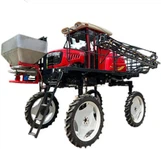
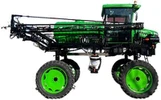
Our High Ground Clearance Boom Sprayer, for example, can be customized with different nozzles to achieve the desired spraying angle. This type of sprayer is suitable for large - scale agricultural operations and can handle a variety of spraying jobs, from weed control to pesticide application.
The Four - wheel Sprayer is another popular option. It offers excellent maneuverability and can be adjusted to provide different spraying angles, making it a great choice for smaller fields or areas with irregular terrain.
For those who need a more compact solution, our 12m Boom Sprayer is a reliable option. It can be configured with nozzles that offer a range of spraying angles, ensuring efficient and effective spraying in medium - sized fields.
Importance of Correct Spraying Angle
Using the correct spraying angle is not only important for achieving the desired spraying results but also for minimizing waste and environmental impact.
If the spraying angle is too wide, the spray may drift beyond the target area, leading to the contamination of non - target areas, such as water bodies, neighboring fields, or sensitive habitats. This can cause harm to the environment and may also lead to legal issues.
Conversely, if the spraying angle is too narrow, the coverage area will be limited, and more passes of the sprayer may be required to cover the entire field. This increases the time, fuel, and labor costs associated with the spraying operation.
Conclusion
In summary, the spraying angle range of a small boom sprayer can vary from around 60 degrees to 120 degrees, depending on factors such as crop type, nozzle design, and pressure. Understanding these factors and choosing the appropriate spraying angle is crucial for achieving effective, efficient, and environmentally friendly spraying operations.
If you're in the market for a small boom sprayer and have questions about spraying angles or which model is right for your specific needs, we're here to help. Don't hesitate to contact us for a detailed consultation and to discuss your procurement options. We're committed to providing high - quality products and excellent customer service to help you succeed in your agricultural endeavors.
References
- Thompson, A. (2018). Agricultural Sprayer Technology. Publisher: AgriTech Press
- Smith, B. (2020). Nozzle Selection and Spraying Techniques. Journal of Agricultural Equipment Science, 15(3), 45 - 56