In the realm of modern agriculture, the choice between manual boom sprayers and power - driven sprayers is a crucial decision that can significantly impact spraying efficiency. As a supplier of manual boom sprayers, I am well - acquainted with the features and performance of both types of sprayers, and I am eager to share my insights on their respective spraying efficiencies.
Understanding Spraying Efficiency
Spraying efficiency can be defined by several factors, including the uniformity of spray distribution, the speed of application, the amount of chemical waste, and the adaptability to different terrains and crop types. A highly efficient sprayer should be able to cover a large area quickly while ensuring that the chemicals are evenly distributed across the target plants.
Manual Boom Sprayers: The Traditional Workhorse
Manual boom sprayers have been a staple in agriculture for decades. They are relatively simple in design, consisting of a boom with multiple nozzles attached to a handheld or backpack - mounted tank. The operator manually pumps the tank to build pressure and then walks through the fields, guiding the boom to cover the desired area.
One of the primary advantages of manual boom sprayers is their cost - effectiveness. They are generally much cheaper than power - driven sprayers, making them an attractive option for small - scale farmers or those on a tight budget. For small plots of land, such as home gardens or small orchards, manual boom sprayers can be a practical and economical choice.
In terms of spraying accuracy, manual boom sprayers can offer excellent control. The operator has direct control over the movement of the boom and can adjust the spraying pattern according to the specific needs of the crops. This is particularly useful when dealing with irregularly shaped fields or when targeting specific plants. For example, in a vineyard, a manual boom sprayer can be carefully maneuvered between the rows of vines to ensure that the leaves and fruits are evenly coated with pesticides.
However, manual boom sprayers also have some limitations when it comes to efficiency. The spraying speed is relatively slow compared to power - driven sprayers. The operator can only cover a limited area per unit of time, which can be a significant drawback for large - scale agricultural operations. Additionally, maintaining a consistent pressure can be challenging, especially during long spraying sessions. This can lead to uneven spray distribution, where some areas may receive too much chemical while others receive too little.
Another issue with manual boom sprayers is the physical exertion required. The operator has to carry the tank and pump continuously, which can be tiring, especially in large fields. This can also affect the operator's ability to maintain a steady pace and accurate spraying pattern over time.
Power - Driven Sprayers: The Modern Solution
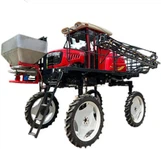
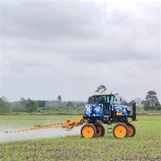
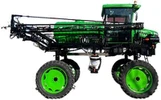
Power - driven sprayers, on the other hand, are equipped with engines or electric motors to generate pressure. There are various types of power - driven sprayers, including tractor - mounted boom sprayers, Boom Weed Sprayers, ATV Sprayers with Booms, and Front Boom Self - propelled Sprayers. These sprayers can cover large areas quickly and efficiently.
The main advantage of power - driven sprayers is their high spraying speed. They can travel at a faster pace than manual operators, allowing them to cover more ground in less time. This is especially beneficial for large - scale farms where time is of the essence, especially during peak spraying seasons. For example, a large - scale wheat farm may need to spray pesticides over hundreds of acres in a short period to prevent the spread of pests and diseases. A power - driven sprayer can complete this task much more quickly than a manual boom sprayer.
Power - driven sprayers also offer more consistent pressure, which results in a more uniform spray distribution. The engines or motors can maintain a constant pressure throughout the spraying process, ensuring that each nozzle delivers the same amount of chemical. This leads to better coverage and more effective pest and disease control.
In addition, power - driven sprayers are often equipped with advanced features such as adjustable nozzles, automatic pressure control, and GPS guidance systems. These features further enhance the spraying efficiency and accuracy. For example, a GPS - guided sprayer can follow a pre - programmed path, ensuring that the entire field is covered without any missed spots.
However, power - driven sprayers also have their drawbacks. They are more expensive to purchase and maintain than manual boom sprayers. The engines or motors require regular servicing, and the cost of fuel or electricity can add up over time. Moreover, power - driven sprayers may not be as suitable for small or irregularly shaped fields. Their large size and high speed can make them difficult to maneuver in tight spaces, and they may cause damage to crops if not operated carefully.
Comparing Spraying Efficiencies in Different Scenarios
To better understand the spraying efficiency of manual boom sprayers and power - driven sprayers, let's consider some different scenarios.
Small - Scale Agriculture
In small - scale agriculture, such as home gardens or small family farms, manual boom sprayers can be a very efficient choice. The low cost and high level of control make them ideal for these operations. For example, a small vegetable garden may only require a few hours of spraying per season. A manual boom sprayer can easily handle this task without the need for a large, expensive power - driven sprayer. The operator can take the time to carefully spray each plant, ensuring that the chemicals are applied exactly where they are needed.
Medium - Scale Agriculture
For medium - scale farms, the choice between manual boom sprayers and power - driven sprayers depends on several factors. If the farm has a variety of terrains and crop types, a combination of both types of sprayers may be the most efficient solution. Manual boom sprayers can be used for spraying in areas where power - driven sprayers have difficulty reaching, such as narrow rows or small patches of crops. Power - driven sprayers can then be used to cover the larger, more open areas of the farm.
Large - Scale Agriculture
In large - scale agriculture, power - driven sprayers are generally the preferred choice. The high spraying speed and consistent pressure are essential for covering large areas quickly and effectively. However, some large - scale farms may still use manual boom sprayers for specific tasks, such as spot - spraying or for areas where power - driven sprayers cannot operate safely.
Conclusion
In conclusion, both manual boom sprayers and power - driven sprayers have their own unique advantages and disadvantages when it comes to spraying efficiency. Manual boom sprayers are cost - effective, offer high control, and are suitable for small - scale operations. Power - driven sprayers, on the other hand, are faster, more consistent, and are better suited for large - scale agriculture.


As a supplier of manual boom sprayers, I believe that manual boom sprayers still have an important place in modern agriculture. They are a reliable and practical option for many farmers, especially those with small - scale or niche operations. However, I also recognize the benefits of power - driven sprayers, and I encourage farmers to carefully consider their specific needs and circumstances when choosing a sprayer.
If you are interested in learning more about our manual boom sprayers or would like to discuss your spraying needs, please feel free to contact us. We are always happy to provide you with more information and help you make the right choice for your farm.
References
- Smith, J. (2018). Agricultural Spraying Equipment: A Comprehensive Guide. Agricultural Publishing.
- Jones, A. (2019). Comparing the Efficiency of Manual and Power - Driven Sprayers in Modern Farming. Journal of Agricultural Technology, 25(3), 123 - 135.
- Brown, C. (2020). The Future of Agricultural Spraying: Trends and Innovations. Agricultural Research Review, 32(2), 89 - 98.