Hey there! As a supplier of Manual Boom Sprayers, I often get asked about the spraying pattern of these nifty tools. So, let's dive right in and explore what the spraying pattern of a manual boom sprayer is all about.
What Exactly is a Spraying Pattern?
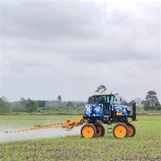
A spraying pattern is basically the way the liquid (like pesticides, herbicides, or fertilizers) is distributed when it comes out of the boom sprayer. It's super important because it determines how well the chemical gets spread across the target area. If the pattern is off, you might end up with uneven coverage, which can lead to some parts of your field getting too much chemical while others don't get enough.
Factors Affecting the Spraying Pattern
There are several factors that can influence the spraying pattern of a manual boom sprayer. Let's take a look at some of the most important ones.
Nozzle Type
The type of nozzle you use plays a huge role in determining the spraying pattern. There are different nozzle designs, each with its own unique pattern. For example, flat - fan nozzles create a fan - shaped spray pattern. They're great for broad - area coverage, like when you're spraying a large field. Cone - shaped nozzles, on the other hand, produce a circular or cone - like pattern. These are often used for more targeted spraying, such as on individual plants or small areas.
Pressure
The pressure at which the liquid is pumped through the nozzles also affects the spraying pattern. Higher pressure generally results in a finer spray with a wider pattern. However, if the pressure is too high, it can cause the droplets to be so small that they might drift away with the wind, leading to poor coverage and potential environmental issues. Lower pressure gives larger droplets and a more concentrated pattern. You need to find the right balance based on your specific spraying needs.


Boom Height
The height of the boom above the target area is another crucial factor. If the boom is too low, the spray pattern might be too narrow, and you'll have to make more passes to cover the area. On the other hand, if it's too high, the spray can become uneven, and there's a greater chance of drift. A good rule of thumb is to keep the boom at a height that allows the individual spray patterns from each nozzle to overlap properly, usually around 18 - 24 inches above the target.
Wind Conditions
Wind can really mess up your spraying pattern. Even a light breeze can cause the spray to drift off - target. When there's wind, the droplets can be carried away from the intended area, resulting in poor coverage and potential damage to non - target areas. It's best to spray when the wind is calm, ideally in the early morning or late evening when wind speeds are usually lower.
Common Spraying Patterns
Uniform Coverage Pattern
This is the ideal pattern for most spraying applications. With a uniform coverage pattern, the chemical is distributed evenly across the target area. To achieve this, you need to choose the right nozzle type, set the correct pressure, and maintain the proper boom height. When you have uniform coverage, you can be sure that every part of the field or plant is getting the right amount of the chemical, which leads to better results.
Overlapping Pattern
In many cases, especially when using flat - fan nozzles, you'll want to create an overlapping pattern. This means that the spray from adjacent nozzles overlaps slightly. Overlapping helps to ensure that there are no gaps in the coverage. For example, if you're spraying a field, you don't want to leave any strips un - sprayed. By overlapping the patterns, you can achieve more consistent and complete coverage.
How Our Manual Boom Sprayers Excel in Spraying Patterns
As a supplier of Manual Boom Sprayers, we take great pride in the quality of our products when it comes to spraying patterns. Our sprayers are designed with precision to offer a wide range of spraying options.
We offer a variety of nozzle types, so you can choose the one that best suits your specific needs. Whether you need a broad - area flat - fan pattern or a more targeted cone - shaped pattern, we've got you covered. Our nozzles are made from high - quality materials that ensure consistent performance over time.
The pressure control on our manual boom sprayers is easy to adjust. You can fine - tune the pressure to get the exact spraying pattern and droplet size you want. This gives you the flexibility to adapt to different spraying conditions and chemicals.
Our boom designs are engineered to maintain a stable height and position. This helps to ensure that the spraying pattern remains consistent across the entire width of the boom. We also provide clear instructions on how to set the boom height correctly for optimal coverage.
Related Products
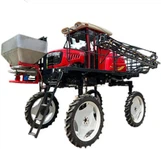
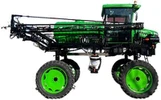
If you're interested in other types of boom sprayers, we also have some great options for you. Check out our Hydraulic Boom Sprayers, which offer more advanced features and higher spraying capacities. Our High Clearance Boom Sprayers are perfect for spraying tall crops without causing damage. And if you're looking for a self - propelled option, our Front Boom Self - propelled Sprayers provide excellent maneuverability and efficiency.
Conclusion
Understanding the spraying pattern of a manual boom sprayer is essential for effective and efficient spraying. By considering factors like nozzle type, pressure, boom height, and wind conditions, you can achieve the best possible coverage. Our Manual Boom Sprayers are designed to help you master these factors and get great results every time.
If you're in the market for a reliable manual boom sprayer or want to learn more about our other products, don't hesitate to reach out. We're here to assist you in finding the perfect spraying solution for your needs. Let's start a conversation and see how we can help you improve your spraying operations.
References
- "Agricultural Spraying Technology" by Agricultural Research Service, USDA
- "Sprayer Calibration and Application" by Extension Service, University of Nebraska - Lincoln