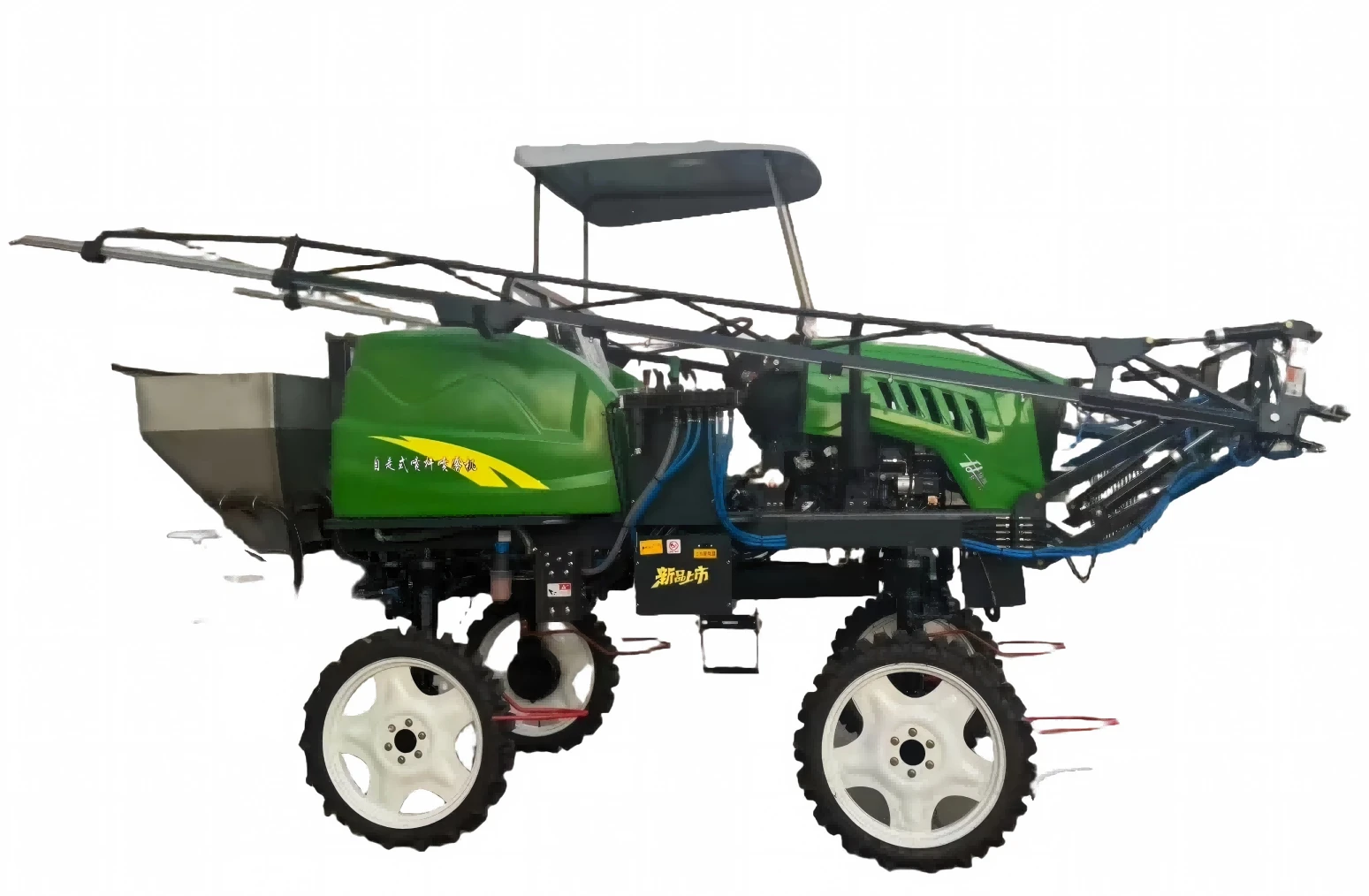
One machine to solve the four biggest headaches in crop spraying
Farmers know all too well the biggest challenges when it comes to spraying: running out of water, requiring constant trips back and forth; dealing with overly wet soil, where vehicles can get hopelessly stuck; struggling to turn around at the ends of rows; and failing to treat crops in time during a sudden pest or disease outbreak.
Equipped with a 2,000-liter tank, a 100-horsepower engine, four-wheel drive, and four-wheel steering, this machine does the work of several people and a tractor combined. It is ideal for large-scale field crops-such as wheat, rice, corn, soybeans, cotton, and potatoes-and is perfectly suited for agricultural cooperatives and service companies managing large, contiguous tracts of land.
2,000-liter tank: Cover over 200 more mu per trip, with far fewer back-and-forth journeys
With a 2,000-liter capacity-and assuming an application rate of 8–10 liters of liquid per *mu*-a single full tank can cover more than 200 *mu*.
What does this mean? Previously, machines with smaller tanks required a dozen or more trips to refill water each day, eating up nearly half the day just in transit. Now, a single fill-up in the morning can last until midday; in well-laid-out fields, this significantly boosts the total area that can be treated in a single day.
100 horsepower: The power you need to get the job done
The 100-horsepower engine delivers high torque, making it effortless to climb slopes, cross ditches, or navigate wet, soft ground-even with a fully loaded tank.
Many users have learned the hard way that "low horsepower paired with a large tank" is a recipe for trouble: once the tank is full, the machine struggles to move, and even slightly muddy soil causes the wheels to spin and slip. A 100-horsepower engine is the ideal match for a 2,000-liter capacity-it keeps moving even when fully loaded, powers up slopes without straining, and maintains stable water and oil temperatures during long hours of operation.
Four-wheel drive: No slipping in wet or muddy fields
With power delivered to all four wheels, the machine offers far superior traction compared to two-wheel-drive models. Who is this machine best suited for?
Cooperatives and family farms: Those with over 500 mu (approx. 33 hectares) of land who need to spray crops 7–8 times a year and are struggling with high labor costs.
Agricultural service providers: Those operating across different regions, requiring high equipment uptime, minimal breakdowns, and rapid transit between sites.
State farms and large-scale cultivation bases: Operations with expansive fields that demand high work efficiency and consistent results.
Agricultural input distributors: Those who can use the machine for demonstrations or rentals to showcase its effectiveness to clients.