Adjusting the flow rate of ATV sprayers with booms is a crucial skill for achieving optimal spraying results in various agricultural and landscaping applications. As a supplier of ATV Sprayers with Booms, I understand the importance of getting this right. In this blog, I'll share some in - depth knowledge on how to adjust the flow rate effectively.
Understanding the Basics of Flow Rate
The flow rate of an ATV sprayer with a boom refers to the volume of liquid that is dispensed through the nozzles per unit of time, usually measured in gallons per minute (GPM) or liters per minute (LPM). It is influenced by several factors, including the pressure in the sprayer system, the size and type of nozzles, and the speed of the ATV.
Pressure and Flow Rate
Pressure is one of the primary factors affecting flow rate. According to the principles of fluid dynamics, as the pressure in the sprayer system increases, the flow rate through the nozzles also increases. This relationship is not always linear, as different nozzle designs may respond differently to changes in pressure. For example, some nozzles may have a more exponential increase in flow rate with increasing pressure.
To measure the pressure in the system, most ATV sprayers are equipped with a pressure gauge. It is essential to monitor this gauge while adjusting the flow rate. If you want to increase the flow rate, you can typically increase the pressure by adjusting the pressure regulator on the sprayer pump. However, it's important not to exceed the maximum pressure rating of the nozzles, as this can cause them to wear out quickly or produce an uneven spray pattern.
Nozzle Size and Type
The size and type of nozzles play a significant role in determining the flow rate. Nozzles come in various sizes, typically designated by a number that represents the flow rate at a specific pressure. For instance, a nozzle labeled "02" may have a flow rate of 0.2 GPM at 40 psi.
Different types of nozzles, such as flat - fan, cone - shaped, or flood nozzles, also have different flow characteristics. Flat - fan nozzles are commonly used for broadcast spraying, while cone - shaped nozzles are suitable for more targeted applications. When selecting nozzles, you need to consider the type of spraying you'll be doing and the desired flow rate. If you need a higher flow rate, you may choose larger - sized nozzles. However, keep in mind that larger nozzles may also require higher pressure to operate effectively.
ATV Speed
The speed at which the ATV is traveling also affects the flow rate per unit area. If the ATV is moving too fast, the liquid may not be distributed evenly, and the effective flow rate per square foot may be lower than desired. Conversely, if the ATV is moving too slowly, you may end up applying too much liquid in one area.
To ensure proper coverage, you need to calculate the appropriate speed based on the desired flow rate and the width of the boom. For example, if you want to apply a certain amount of liquid per acre and you know the flow rate of your nozzles and the width of the boom, you can use a simple formula to determine the optimal speed.
Step - by - Step Guide to Adjusting Flow Rate
Step 1: Select the Right Nozzles
Before you start adjusting the flow rate, make sure you have the right nozzles for your application. Consider the type of liquid you'll be spraying (e.g., herbicide, pesticide, fertilizer), the target area (e.g., large field, small garden), and the desired spray pattern. You can refer to the nozzle manufacturer's guidelines for more information on nozzle selection.
Step 2: Check the Pressure
Start the ATV sprayer and let it build up pressure. Check the pressure gauge to ensure that the pressure is within the recommended range for the selected nozzles. If the pressure is too low, you can increase it by turning the pressure regulator clockwise. If the pressure is too high, turn the regulator counter - clockwise.
Step 3: Measure the Initial Flow Rate
To measure the initial flow rate, you can use a container and a stopwatch. Place the container under one of the nozzles and run the sprayer for a specific period, say 30 seconds. Then, measure the volume of liquid collected in the container. Multiply this volume by 2 to get the flow rate in gallons or liters per minute. Repeat this process for a few different nozzles to ensure that the flow rate is consistent across the boom.
Step 4: Make Adjustments
If the measured flow rate is lower than the desired flow rate, you can try increasing the pressure slightly. However, be careful not to over - pressurize the system. If increasing the pressure doesn't achieve the desired flow rate, you may need to consider changing to larger - sized nozzles.
On the other hand, if the flow rate is too high, you can decrease the pressure or switch to smaller - sized nozzles. It may take a few trials and errors to get the flow rate just right.
Step 5: Consider ATV Speed
Once you have adjusted the flow rate, you need to consider the speed of the ATV. As mentioned earlier, the speed affects the coverage and the effective flow rate per unit area. You can use a GPS device or a speedometer on the ATV to monitor the speed. Adjust the speed as needed to ensure uniform coverage.
Different Types of ATV Sprayers with Booms and Flow Rate Adjustment
High Clearance Boom Sprayers
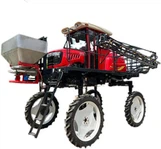
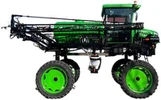
High Clearance Boom Sprayers are designed for spraying in tall crops or uneven terrain. These sprayers often have a larger tank capacity and longer booms. When adjusting the flow rate of high - clearance boom sprayers, you need to pay special attention to the pressure distribution across the long boom. Uneven pressure can lead to inconsistent flow rates at different points along the boom. You may need to use a pressure - compensating system or adjust the pressure at different sections of the boom to ensure uniform spraying.
Hydraulic Boom Sprayers
Hydraulic Boom Sprayers are powered by the ATV's hydraulic system. The flow rate adjustment in hydraulic boom sprayers is closely related to the hydraulic pressure and flow. You can adjust the hydraulic pressure to control the flow rate of the sprayer. However, you need to be aware of the capacity of the ATV's hydraulic system and not overload it.
Manual Boom Sprayers
Manual Boom Sprayers are simpler in design and rely on manual pumping to build up pressure. Adjusting the flow rate in manual boom sprayers is more labor - intensive. You need to pump the handle at a consistent rate to maintain a stable pressure. To increase the flow rate, you may need to pump faster, but this can be tiring for long - term use.


Troubleshooting Flow Rate Issues
Inconsistent Flow Rate
If you notice that the flow rate is inconsistent across the boom, it could be due to clogged nozzles, uneven pressure distribution, or a problem with the pump. Check the nozzles for any blockages and clean them if necessary. You can also check the pressure gauge at different points along the boom to identify any pressure variations. If the pump is not working properly, it may need to be repaired or replaced.
Low Flow Rate
A low flow rate can be caused by a clogged filter, a weak pump, or incorrect nozzle selection. Check the filter and clean or replace it if it is dirty. If the pump is not generating enough pressure, it may need to be serviced. Consider whether the selected nozzles are too small for the desired flow rate.
High Flow Rate
A high flow rate may result in over - application of the liquid. This can be due to excessive pressure, incorrect nozzle size, or a malfunctioning pressure regulator. Reduce the pressure by adjusting the regulator and check if the nozzles are too large.
Conclusion
Adjusting the flow rate of ATV sprayers with booms is a complex but essential task for achieving efficient and effective spraying. By understanding the factors that affect flow rate, following the step - by - step guide, and being able to troubleshoot common issues, you can ensure that your spraying operations are successful.
As a supplier of ATV Sprayers with Booms, we are committed to providing high - quality products and expert advice. If you have any questions about flow rate adjustment or are interested in purchasing our ATV sprayers, please feel free to contact us for further discussion and procurement negotiation.
References
- "Sprayer Operator's Manual" - Various manufacturers' manuals provide detailed information on sprayer operation and flow rate adjustment.
- "Agricultural Spraying Technology" - Academic resources on the principles of agricultural spraying, including flow rate control.