The spraying operation of an agricultural boom sprayer is a crucial aspect of modern farming, directly influencing the efficiency and effectiveness of pest control, fertilization, and other agricultural activities. Among the various environmental factors that can impact the spraying process, wind plays a particularly significant role. As a leading agricultural boom sprayer supplier, we understand the importance of comprehending how wind affects spraying operations. In this blog, we will delve into the multifaceted effects of wind on the spraying of an agricultural boom sprayer and offer insights to help farmers optimize their spraying practices.
1. Drift and Off - Target Deposition
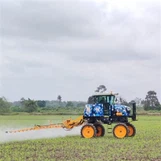
One of the most obvious and detrimental effects of wind on agricultural boom sprayer spraying is drift. Drift refers to the movement of spray droplets away from the intended target area. When wind is present, it can carry these droplets over long distances, leading to off - target deposition. This is a major concern for several reasons.
Firstly, off - target deposition can cause damage to non - target crops, plants, or even nearby water bodies. For example, if a herbicide is sprayed on a field and drifts onto a neighboring field of sensitive crops, it can result in stunted growth or even death of those crops. In addition, if the spray drifts into water sources, it can contaminate the water, posing a threat to aquatic life and potentially affecting human water supplies.
Secondly, drift reduces the efficiency of the spraying operation. The spray that does not reach the intended target means that farmers are wasting valuable pesticides or fertilizers. This not only increases the cost of production but also fails to achieve the desired level of pest control or fertilization in the treated area.
The degree of drift is highly dependent on wind speed and direction. Generally, as wind speed increases, the risk of drift also increases. At low wind speeds (less than 2 - 3 m/s), the spray droplets may fall relatively close to the intended target. However, when the wind speed exceeds 8 - 10 m/s, the risk of significant drift becomes very high. The direction of the wind is also crucial. If the wind is blowing towards a non - target area, such as a residential area or a water body, the consequences of drift can be severe.
2. Uneven Coverage
Wind can also cause uneven coverage of the spray on the target area. When the wind blows against the boom of the sprayer, it can disrupt the normal pattern of spray distribution. The spray droplets on the windward side of the boom may be pushed back, resulting in less coverage in that area. On the other hand, the leeward side may receive an excessive amount of spray, leading to over - application.
Uneven coverage can have a negative impact on the effectiveness of pest control and fertilization. In the case of pest control, areas with insufficient spray coverage may still have pests surviving, which can lead to a resurgence of the pest population. For fertilization, uneven application can result in some plants receiving too little nutrients, while others receive too much. This can lead to uneven growth and reduced crop yields.
To mitigate the problem of uneven coverage, farmers need to adjust the spraying parameters according to the wind conditions. For example, they can reduce the forward speed of the sprayer to allow more time for the spray to settle evenly. They can also adjust the height of the boom to ensure that the spray is released at an optimal distance from the target plants.
3. Droplet Size and Atomization
Wind can influence the size of the spray droplets and the atomization process. Atomization is the process of breaking the liquid into small droplets. When the wind is strong, it can interact with the spray droplets as they are being formed, causing them to break into even smaller droplets. Smaller droplets are more prone to drift, as mentioned earlier.
In addition, the wind can affect the uniformity of droplet size. A turbulent wind can create a situation where there is a wide range of droplet sizes, from very small to relatively large. This non - uniform droplet size distribution can further contribute to uneven coverage and increased drift.
Farmers can choose different types of nozzles to control the droplet size and reduce the impact of wind. For example, some nozzles are designed to produce larger droplets, which are less likely to drift. However, larger droplets may also have a reduced ability to cover the entire plant surface, so a balance needs to be struck between drift reduction and coverage.
4. Boom Stability
The wind can also affect the stability of the boom of the agricultural boom sprayer. The boom is a long, horizontal structure that holds the nozzles. When the wind blows against the boom, it can cause it to sway or vibrate. This can lead to changes in the spray pattern and height, further contributing to uneven coverage and drift.
If the boom is not properly stabilized, excessive swaying can also cause mechanical damage to the boom and the nozzles. For example, the constant vibration can loosen the connections between the nozzles and the boom, leading to leaks or misalignment of the spray.
To improve boom stability, some agricultural boom sprayers are equipped with advanced suspension systems and stabilizers. These systems can help to reduce the impact of wind on the boom, ensuring a more stable spraying operation.
5. Mitigating the Effects of Wind
As an agricultural boom sprayer supplier, we offer several solutions to help farmers mitigate the effects of wind on spraying operations.
Firstly, we recommend choosing the right time for spraying. Farmers should avoid spraying during periods of high wind. Early morning or late evening when the wind is usually calmer are often the best times for spraying. They can also use weather forecasting tools to plan their spraying operations in advance.


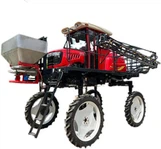
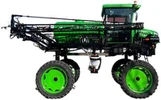
Secondly, using the appropriate equipment is essential. We offer a variety of boom sprayers, such as Manual Boom Sprayers, High Clearance Boom Sprayers, and Hydraulic Boom Sprayers. These sprayers are designed with features to reduce the impact of wind, such as adjustable booms and advanced nozzle systems.
In addition, farmers can use drift - reducing additives. These additives can increase the viscosity of the spray solution, making the droplets larger and less likely to drift. They can also use shields or deflectors on the boom to protect the spray from the wind.
Conclusion
In conclusion, wind has a significant impact on the spraying of an agricultural boom sprayer. It can cause drift, uneven coverage, affect droplet size and boom stability, all of which can reduce the efficiency and effectiveness of the spraying operation and have potential negative environmental impacts. As an agricultural boom sprayer supplier, we are committed to providing farmers with high - quality equipment and solutions to help them overcome the challenges posed by wind.
If you are interested in learning more about our agricultural boom sprayers or have any questions regarding spraying operations in windy conditions, we encourage you to contact us for a detailed discussion. We look forward to assisting you in optimizing your agricultural spraying practices.
References
- ASABE Standards. (XXXX). Standard for agricultural sprayers. American Society of Agricultural and Biological Engineers.
- Bond, J., & Grundy, A. (2001). The influence of wind on pesticide drift from agricultural sprayers. Journal of Agricultural Engineering Research, 79(3), 273 - 280.
- Miller, P. C. H., & Butler - Ellis, M. (1998). Pesticide application: principles and practice. Blackwell Science.